
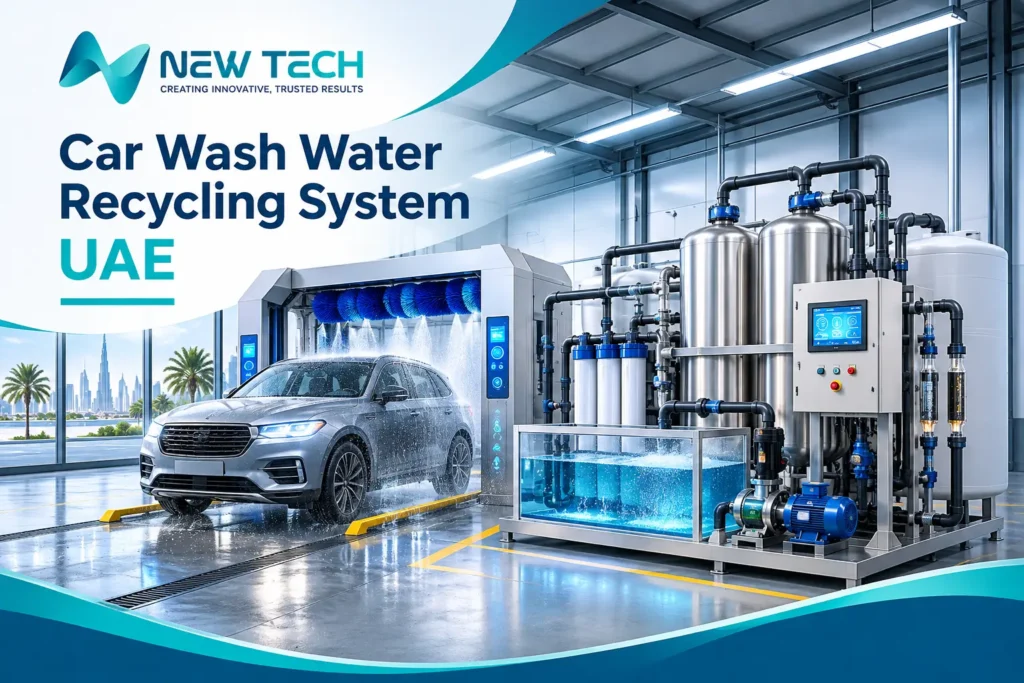
Looking for a car wash water recycling system in the UAE to reduce freshwater consumption and manage wastewater? An effective solution starts with understanding oil, suspended solids, detergents and the quality required for reuse.
This car wash water recycling system UAE guide explains treatment technologies, realistic water savings, system sizing and operating costs. Discover how to prepare a technical equipment enquiry and evaluate suitable water treatment options with New Tech Water.
Car Wash Water Recycling System UAE: How It Works and Why It Matters
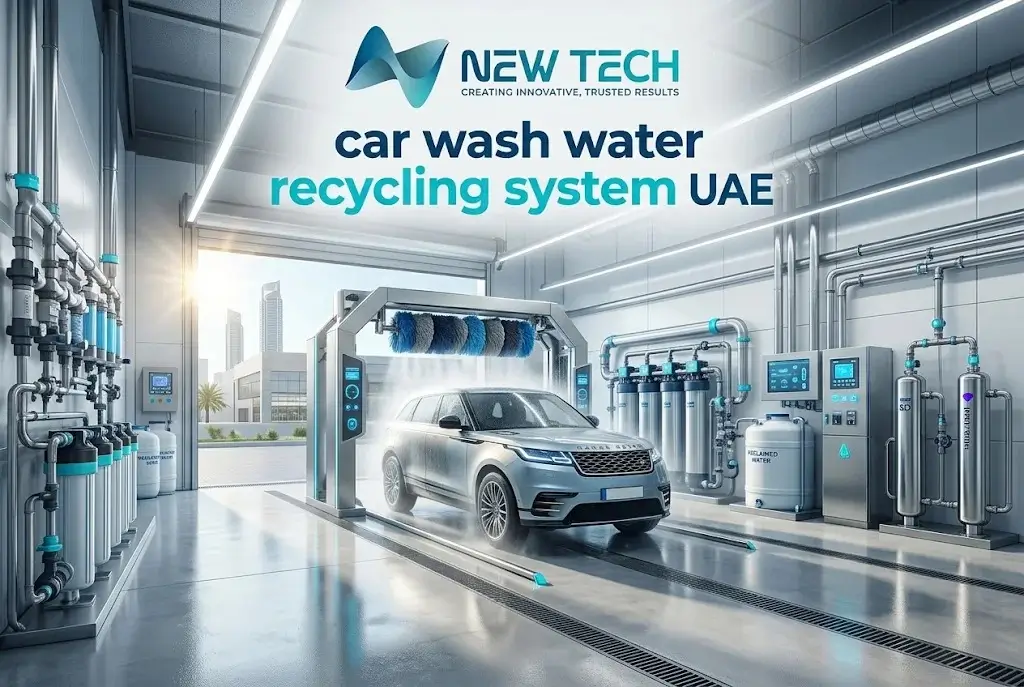
A car wash water recycling system UAE project involves collecting vehicle wash wastewater, removing relevant contaminants and returning suitably treated water to selected washing stages. Instead of relying entirely on freshwater for every wash cycle, operators can assess whether part of their used water can be recovered and reused. This approach requires a treatment process designed around actual wastewater characteristics and the quality expected at the point of reuse.
Car wash wastewater can contain sand, road dirt, oil, grease, cleaning detergents and dissolved substances. The concentration of these contaminants changes with the vehicles being washed and the chemicals used. Consequently, a recycling arrangement designed for a manual wash bay may be unsuitable for an automatic car wash or a heavy-vehicle fleet depot. Treatment performance, collection efficiency and storage capacity must all be evaluated before selecting equipment.
Wastewater Treatment, Water Recycling and Freshwater Make-Up
Wastewater treatment removes or reduces specified pollutants. Water recycling goes further by making the treated water available for a defined reuse application. A system that achieves an applicable discharge specification does not automatically produce water suitable for every washing stage. Freshwater make-up remains necessary to replace losses and meet any higher-quality rinsing requirements.
The objective is to establish a realistic balance between water recovery, treatment performance, operating reliability and total cost. A technically appropriate car wash water reuse system UAE can help reduce freshwater demand, but the achievable benefit depends on measured site conditions rather than a universal savings percentage.
Discover the Right Water Treatment Equipment for Your Car Wash. Share your wastewater characteristics, washing capacity and target reuse quality with New Tech Water.
اطلب استشارة مجانية الآن
تواصل مع خبرائنا لمساعدتك في اختيار محطة المياه المناسبة لاحتياجاتك بأفضل كفاءة وأقل تكلفة.
Why UAE Car Wash Businesses Consider Water Recycling
Water is essential for vehicle pre-washing, detergent application, cleaning and rinsing. For facilities handling many vehicles daily, freshwater consumption may become an important operating expense. Reusing appropriately treated wastewater in selected stages can reduce purchased-water demand and may influence wastewater handling costs. However, the financial benefits depend on the local tariff, actual recovery rate and treatment expenses.
Reducing Freshwater Consumption
Freshwater replacement is one of the main reasons businesses evaluate recycling systems. The potential saving should be estimated from the number of vehicles washed, litres consumed per vehicle and quantity of reclaimed water that can actually be used. A stated treatment recovery percentage is not necessarily the same as the percentage reduction in purchased freshwater.
Improving Wastewater Management
Vehicle wash water may contain pollutants requiring separation or treatment before discharge. A recycling process can form part of the facility’s wastewater management strategy, but residual wastewater, separated oil, used filter materials and sludge still require appropriate handling. Reuse must not be treated as an exemption from relevant environmental or drainage requirements.
Supporting Reliable Daily Operations
Successful recycling also depends on the equipment’s ability to handle variable wash demand. A facility may experience high flows during busy periods and limited wastewater production at other times. Suitable storage, monitoring and freshwater backup arrangements help maintain washing operations when reclaimed water is unavailable or does not meet the required quality.
Evaluate Your Car Wash Water Consumption and Treatment Needs. Compare measurable freshwater savings with the expected operating costs.
اطلب استشارة مجانية الآن
تواصل مع خبرائنا لمساعدتك في اختيار محطة المياه المناسبة لاحتياجاتك بأفضل كفاءة وأقل تكلفة.
What Contaminants Must Be Removed from Car Wash Wastewater?
Car wash wastewater contains a mixture of pollutants rather than one type of contamination. Some components settle naturally, while others remain suspended, dissolve in water or form stable emulsions. A representative wastewater analysis helps determine which treatment stages are technically justified and prevents buyers from selecting equipment based only on flow capacity.
Suspended Solids, Sand and Road Dirt
Sand, mud and particles removed from vehicle bodies and undercarriages may accumulate in drainage channels and tanks. Total Suspended Solids, or TSS, and turbidity are useful indicators when assessing settling and filtration requirements. The particle characteristics, flow rate and required water clarity should guide the separation process.
Oil, Grease and Emulsified Hydrocarbons
Oil and grease can enter wash water from vehicle surfaces and mechanical residues. Free oil may separate under suitable gravity conditions, but emulsified oil behaves differently because small droplets remain dispersed in the water. Cleaning agents can stabilize these emulsions and make conventional oil separation less effective.
When emulsified oil is present, the supplier should explain how the proposed treatment process will address it. Depending on wastewater chemistry, additional physicochemical or other treatment may be necessary. A simple oil trap should not be assumed to remove all hydrocarbons and surfactant-associated contamination.
COD, Detergents and Surfactants
Chemical Oxygen Demand, or COD, provides an indication of oxidizable substances in wastewater. Shampoos, degreasers and other cleaning chemicals can contribute organic loading and surfactants. These constituents may cause foaming, interfere with separation processes or affect reclaimed-water quality. The appropriate treatment depends on the formulation, concentration and required reuse specification.
Dissolved Salts and Microbiological Concerns
Electrical conductivity and TDS help evaluate dissolved minerals, which may matter for selected rinsing applications. Storage and recirculation can also create conditions for biological growth or unpleasant odours if water quality and operating controls are inadequate. Monitoring requirements should be based on the process and intended reuse, rather than applying the same testing program to every car wash.
Car Wash Wastewater Testing Checklist
| Parameter | Potential Concern | Treatment Consideration |
|---|---|---|
| TSS / Turbidity | Particles, poor clarity and equipment fouling. | Sedimentation and suitable filtration. |
| Oil & Grease | Free or emulsified hydrocarbon contamination. | Oil separation and additional treatment where needed. |
| COD | Oxidizable pollutant loading. | Process selected for the actual wastewater chemistry. |
| Surfactants | Foaming and stable emulsions. | Targeted treatment and chemical compatibility assessment. |
| pH | Process efficiency and material compatibility. | Appropriate conditioning if justified. |
| EC / TDS | Dissolved minerals affecting selected reuse stages. | Evaluate polishing or desalination only where required. |
| Microbiological Indicators | Storage and exposure-related risks. | Suitable monitoring and operational controls. |
Results should be interpreted together with the washing chemicals, vehicle types and required treatment performance. Laboratory testing provides a more reliable basis for equipment procurement than assuming that every car wash has identical wastewater characteristics.
Identify Your Wastewater Treatment Challenges. Send your TSS, oil, COD and other relevant analysis results to New Tech Water.
اطلب استشارة مجانية الآن
تواصل مع خبرائنا لمساعدتك في اختيار محطة المياه المناسبة لاحتياجاتك بأفضل كفاءة وأقل تكلفة.
How Does a Car Wash Water Recycling Plant Work?
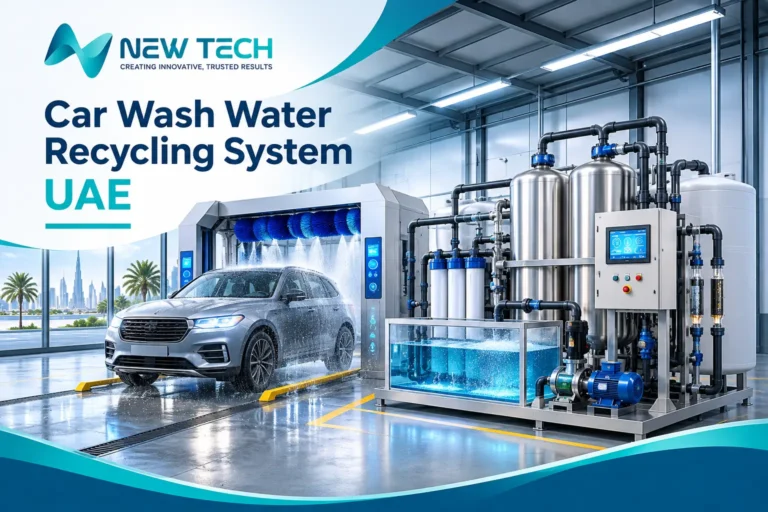
A vehicle wash water recycling system may combine several treatment operations to produce water suitable for selected washing stages. The exact process depends on the contaminants, flow variations and output specification. Some facilities require only particular separation and filtration stages, while others need additional treatment for detergent-related pollution, emulsified oil or biological concerns.
Step 1: Wastewater Collection and Screening
Used wash water is directed to a designated collection arrangement. Screens may remove larger debris before the wastewater enters pumps, tanks or additional treatment equipment. The collection system should be designed around hydraulic capacity, site drainage and maintenance access. Waste streams that could interfere with treatment should be assessed before they are combined.
Step 2: Sedimentation and Flow Equalization
Sedimentation can remove suitable settleable solids, while equalization storage helps manage changes in wastewater volume and composition. These stages may protect downstream equipment and support more stable treatment operation. Tank design should consider sludge accumulation, cleaning access and realistic peak flows.
Step 3: Oil-Water Separation
An oil separator can remove suitable free oil under defined operating conditions. Its performance depends on flow, oil-droplet characteristics and wastewater chemistry. When detergents create stable oil emulsions, the process may require additional treatment rather than relying entirely on gravity separation.
Step 4: Treatment of Remaining Contaminants
Selected physicochemical, biological, membrane or other treatment processes may be necessary for residual contamination. Technology selection should follow wastewater testing and the required treated-water quality. Where performance is uncertain, laboratory or pilot testing may help establish an appropriate design.
Step 5: Filtration and Final Polishing
Media filtration and other polishing equipment may improve water clarity and reduce selected remaining pollutants. Activated carbon may be considered for certain organic contaminants, subject to suitability and replacement requirements. Any disinfection or dissolved-salt treatment should be justified by the intended reuse application.
Step 6: Storage, Monitoring and Reuse
Reclaimed water is stored and distributed to washing stages for which its quality is suitable. Storage and piping arrangements should protect water quality and prevent unintended cross-connections. The operator should also establish a procedure for diverting water or switching to an appropriate alternative supply if the reuse specification is not met.
Compare Treatment Options for Your Car Wash Wastewater. Define the collection, filtration and polishing requirements before requesting equipment.
اطلب استشارة مجانية الآن
تواصل مع خبرائنا لمساعدتك في اختيار محطة المياه المناسبة لاحتياجاتك بأفضل كفاءة وأقل تكلفة.
Choosing Treatment Equipment: Oil Separation, Filtration and RO
Different treatment technologies solve different problems. A car wash wastewater filtration system is not automatically an oil-removal system, and an RO unit should not be used as a substitute for properly addressing oil, solids or organic contamination upstream. An equipment proposal should identify each treatment stage’s purpose and the conditions under which it is expected to perform.
| Technology | Primary Function | Important Limitation |
|---|---|---|
| Screening and Sedimentation | Remove debris and settleable particles. | Limited effectiveness for fine or stable contaminants. |
| Gravity Oil Separator | Separate suitable free oil. | May not adequately remove emulsified oil. |
| Media Filtration | Reduce selected suspended solids. | Does not provide general dissolved-salt removal. |
| Activated Carbon | Reduce certain organic substances. | Performance and replacement depend on the actual wastewater. |
| Physicochemical Treatment | Address specified emulsions or other pollutants. | Requires process-specific chemistry and sludge management. |
| Biological Treatment | Reduce suitable biodegradable pollutants. | Requires controlled biological operating conditions. |
| Reverse Osmosis | Reduce many dissolved constituents. | Requires suitable pretreatment and concentrate management. |
When Is an Oil-Water Separator Enough?
An oil separator may be appropriate for a defined free-oil removal duty. However, its effectiveness should be evaluated against the actual wastewater and the required discharge or reuse quality. If COD, emulsified oil, suspended solids or surfactants remain above the target specification, additional process stages may be necessary.
When Might Reverse Osmosis Be Needed?
RO may be considered if a specific reuse stage requires dissolved-mineral reduction and the feedwater can be properly pretreated. It is not a default requirement for every recycling plant. Membrane fouling, operating pressure, energy use, recovery and concentrate disposal must be evaluated before including RO in the design.
For related equipment considerations, see New Tech Water’s Industrial RO Plant UAE guide, which discusses feedwater assessment, membrane treatment and operating requirements.
What Does Research Say About Combined Treatment?
A systematic review of car wash wastewater treatment technologies published in 2020 evaluated several categories of treatment, including membrane, electrochemical and combined processes. Its findings support assessing combinations of suitable technologies for complex wastewater rather than assuming one process can remove all relevant contaminants.
Read the systematic review of car wash wastewater treatment technologies for scientific background.
Compare Oil Separation and Filtration Technologies. Request equipment specifications matched to your wastewater analysis and required reuse quality.
اطلب استشارة مجانية الآن
تواصل مع خبرائنا لمساعدتك في اختيار محطة المياه المناسبة لاحتياجاتك بأفضل كفاءة وأقل تكلفة.
Which Car Wash Stages Can Use Recycled Water?
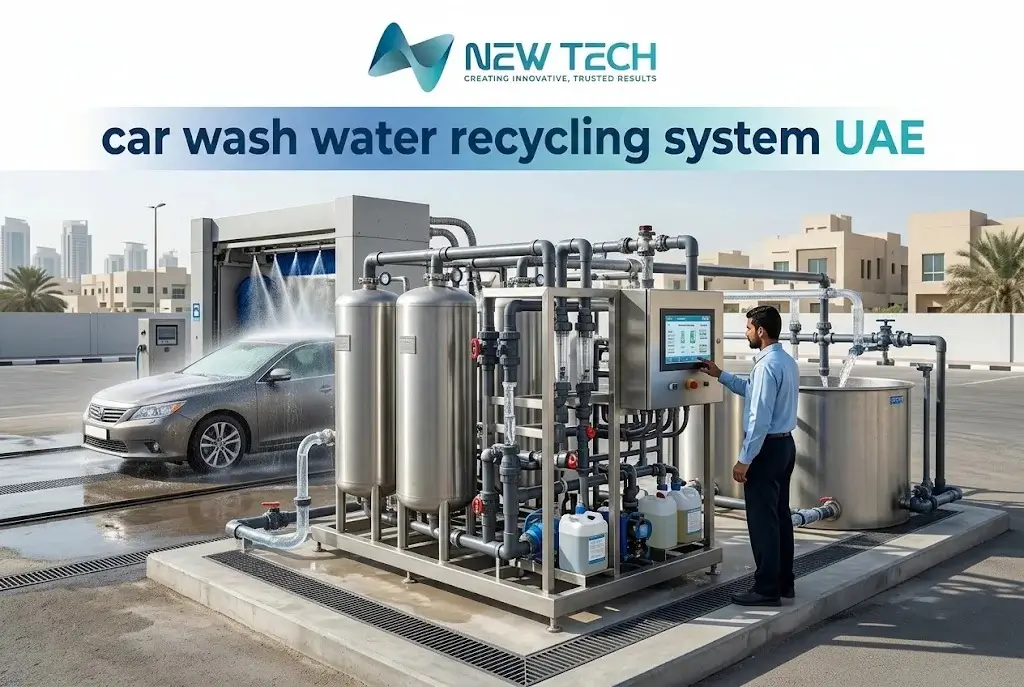
Reclaimed-water suitability depends on the washing stage, cleaning chemicals, equipment requirements and the expected finish. Water that is acceptable for an initial cleaning stage may not provide the clarity or mineral quality needed for a final rinse. A recycling design should therefore identify where reclaimed water will be used before selecting the treatment target.
Pre-Wash and Main-Wash Applications
Appropriately treated reclaimed water may be considered for selected pre-wash or main-wash stages. Operators should check suspended solids, odour, residual chemicals and compatibility with pumps and washing equipment. The water must also meet any relevant safety and operating requirements.
Final Rinse and Spot-Free Rinse
Final rinsing may require cleaner or lower-mineral water to achieve the intended vehicle finish. Spot-free rinsing may have specific dissolved-solids requirements set by the equipment or operating process. Additional polishing, separately treated water or freshwater may therefore be necessary.
Reuse Suitability by Washing Stage
| Washing Stage | Potential Water Supply | Reuse Acceptance Condition |
|---|---|---|
| Pre-Wash | Suitable reclaimed water may be considered. | Adequate solids removal and equipment compatibility. |
| Main Wash | Reclaimed water where appropriate. | Compatible with cleaning chemicals and required performance. |
| Final Rinse | Higher-quality reclaimed or freshwater supply. | Meets finish quality, equipment and safety requirements. |
| Spot-Free Rinse | Water with appropriately controlled mineral content. | Meets the specified dissolved-solids and rinse requirements. |
These are evaluation considerations, not automatic approvals for reuse. The actual water quality specification must be defined for each installation. Where reclaimed water is unsuitable, it should be diverted or replaced by a suitable supply rather than continuously recirculated.
Determine Which Washing Stages Can Use Reclaimed Water. Define the required water quality for pre-wash, main-wash and final-rinse applications.
اطلب استشارة مجانية الآن
تواصل مع خبرائنا لمساعدتك في اختيار محطة المياه المناسبة لاحتياجاتك بأفضل كفاءة وأقل تكلفة.
Manual, Automatic and Fleet Wash Recycling Systems
A car wash water recycling plant UAE buyers consider should match the facility’s operating pattern. Manual, automatic and fleet washing operations can differ significantly in flow rate, wash chemistry, pollutant loading and available treatment space. These differences influence collection arrangements, equalization capacity and equipment selection.
Manual Car Wash Facilities
Manual wash bays can experience variable water consumption because washing practices, vehicle size and operating duration differ. Equipment sizing should therefore consider measured water use where available, the number of wash bays and peak wastewater flow. Limited installation space may also influence the choice of tanks and filtration equipment.
Automatic Car Wash Facilities
Automatic systems may use defined washing cycles with distinct flow requirements at different stages. The recycling system should reflect the machine manufacturer’s water quality specifications and the timing of those stages. Storage capacity and treatment production must work together to support reliable operation.
Fleet and Heavy-Vehicle Washing
Fleet depots may wash buses, trucks or other commercial vehicles with different levels of mud, road debris or oil contamination. A process appropriate for passenger-car washing should not be assumed suitable for heavy-vehicle wastewater without verifying the actual pollutant loading.
Specify Equipment Around Your Wash Operation. Provide vehicle throughput, wash type, peak flow and available site space in your enquiry.
اطلب استشارة مجانية الآن
تواصل مع خبرائنا لمساعدتك في اختيار محطة المياه المناسبة لاحتياجاتك بأفضل كفاءة وأقل تكلفة.
Car Wash Wastewater Regulations and Discharge Requirements in the UAE
Wastewater discharge and internal water reuse are separate technical and regulatory matters. Car wash businesses should confirm the applicable requirements for their emirate, activity, discharge route and proposed treatment arrangement. Installing a recycling system does not automatically establish compliance, and residual wastes may still need approved handling or disposal.
Dubai Oil Trap Requirements
Article 16 of Dubai Local Order No. 8 of 2002 addresses oil traps at car wash stations before wastewater is discharged into the public sewerage network, septic tanks, cesspools or other approved locations. The provision also addresses ineffective or non-operational oil separation equipment and excessive oil content under specified circumstances.
Article 17 restricts wastewater discharge into the public sewerage network where the wastewater may exceed treatment capacity, contains toxic or hazardous substances, or fails to meet the requirements prescribed by the competent department.
See the official Dubai Local Order No. 8 of 2002.
Oil Separation Does Not Guarantee Compliance
Installing an oil trap does not prove that all wastewater parameters meet the applicable limits. The operator may still need to assess COD, suspended solids, chemicals and other relevant constituents according to the approved discharge requirements. The actual legal obligations and current implementation rules must be confirmed with the competent authority.
Requirements for Different UAE Facilities
Requirements can differ depending on whether the operation is a standalone wash bay, a facility at a fuel station or part of an industrial or fleet-maintenance site. Businesses in Sharjah and Abu Dhabi should verify their own applicable regulations and approvals rather than assume Dubai’s local order governs the same activities throughout the country.
Compliance Planning Checklist
- Identify the competent wastewater and drainage authority.
- Confirm the approved wastewater discharge destination.
- Check oil separation requirements.
- Review applicable wastewater quality limits.
- Confirm any requirements for internal reclaimed-water use.
- Arrange suitable removal of sludge and separated oil.
- Maintain testing and equipment inspection records where required.
This section is a regulatory overview rather than legal approval. Project teams should check the current legal text, permits and technical requirements before finalizing equipment or altering the facility’s drainage system.
Plan Treatment Around Applicable Wastewater Requirements. Verify oil separation, discharge and reuse obligations before selecting equipment.
اطلب استشارة مجانية الآن
تواصل مع خبرائنا لمساعدتك في اختيار محطة المياه المناسبة لاحتياجاتك بأفضل كفاءة وأقل تكلفة.
How to Size a Car Wash Water Recycling System
System sizing should begin with a water balance rather than a nominal recycling percentage. Operators need to estimate gross wash demand, the quantity of wastewater actually collected, treatment losses and the volume of reclaimed water that can be used in suitable washing stages. The plant’s hydraulic capacity must also consider peak flow, operating hours and storage.
Step 1: Calculate Daily Water Consumption
Consider a hypothetical facility washing 60 vehicles per day, with an assumed average water consumption of 120 litres per vehicle.
Daily Water Demand = Vehicles per Day × Water per Vehicle
Daily Water Demand = 60 × 120 = 7,200 litres/day
Daily Water Demand = 7.20 m³/day
The 120-litre value is an illustrative assumption, not a standard consumption figure for all UAE car washes. Real consumption should be measured or estimated using the selected washing equipment.
Step 2: Estimate Wastewater Collection
Assume that 80% of gross wash water reaches the wastewater collection system. The remaining 20% represents water that is not captured, including possible evaporation, splashing and vehicle carry-off.
Collected Wastewater = 7.20 × 0.80 = 5.76 m³/day
Water Not Collected = 7.20 – 5.76 = 1.44 m³/day
The actual collection fraction depends on the wash bay, drainage arrangements and operating practices.
Step 3: Estimate Reclaimed-Water Production
Assume the treatment process produces 4.68 m³/day of suitable reclaimed water from the 5.76 m³/day collected.
Treatment Yield = 4.68 / 5.76 × 100 = 81.25%
Treatment Process Loss = 5.76 – 4.68 = 1.08 m³/day
Process losses may include discharged residual water, sludge-associated water and other losses, depending on the technology. These streams require appropriate handling and should not be assumed to follow the same route as uncaptured wash water.
Step 4: Calculate Freshwater Make-Up
If the full 4.68 m³/day of suitable reclaimed water is used to replace freshwater in approved washing stages:
Freshwater Offset = 4.68 / 7.20 × 100 = 65%
Freshwater Make-Up = 7.20 – 4.68 = 2.52 m³/day
Complete Illustrative Water Balance
| Water Balance Component | Daily Volume |
|---|---|
| Gross Water Demand | 7.20 m³ |
| Collected Wastewater | 5.76 m³ |
| Water Not Captured | 1.44 m³ |
| Reclaimed Water Produced and Used | 4.68 m³ |
| Treatment Process Losses | 1.08 m³ |
| Freshwater Make-Up | 2.52 m³ |
The total quantity not recovered for reuse is 2.52 m³/day in this simplified example, consisting of 1.44 m³/day not captured and 1.08 m³/day lost during treatment. These components have different physical destinations and should be evaluated separately.
The treatment yield of 81.25% and freshwater offset of 65% are distinct calculations. Neither figure represents a guaranteed performance level for equipment supplied by New Tech Water.
Step 5: Estimate Average Treatment Flow
If the facility processes 5.76 m³/day of collected wastewater over eight treatment operating hours:
Average Treatment Feed Rate = 5.76 / 8 = 0.72 m³/h
This is an average feed rate. Final sizing should address peak wash-bay flows, equalization storage, downtime, treatment stage capacity and the required reclaimed-water production schedule.
Calculate Your Required Recycling Capacity. Share measured consumption, wastewater collection and operating hours for a more accurate equipment assessment.
اطلب استشارة مجانية الآن
تواصل مع خبرائنا لمساعدتك في اختيار محطة المياه المناسبة لاحتياجاتك بأفضل كفاءة وأقل تكلفة.
Car Wash Water Recycling System UAE Cost and Payback
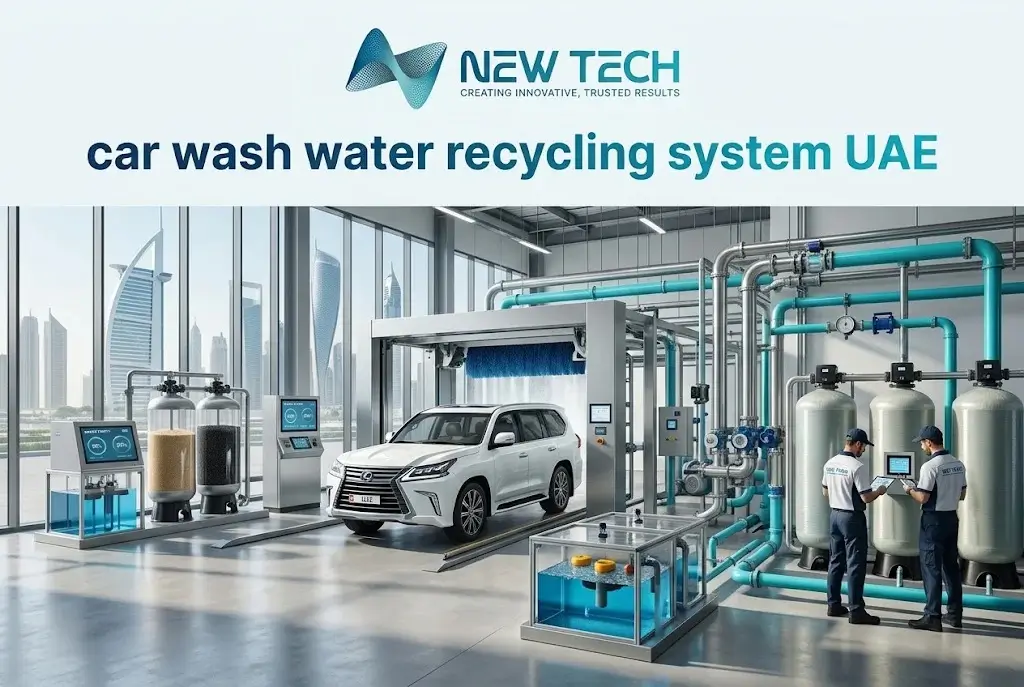
A car wash water recycling system UAE should be evaluated using capital expenditure, operating expenses and the amount of freshwater it can realistically replace. Purchase price alone does not show whether recycling is financially suitable for a particular facility. Wastewater chemistry, treatment complexity, maintenance and disposal arrangements can significantly influence lifecycle costs.
Capital Expenditure: CAPEX
Initial investment may include collection modifications, tanks, oil separation equipment, treatment units, filtration, controls and installation-related work. More complex wastewater may require additional treatment stages. Quotations should clarify what equipment and services are included rather than assuming every proposal covers a complete recycling installation.
Operating Expenditure: OPEX
Operating costs may include electricity, treatment chemicals, consumables, filter maintenance, laboratory testing, sludge removal and equipment servicing. Residual wastewater and separated oil may also carry handling costs. The actual expense structure should be evaluated using the proposed process and local service arrangements.
Illustrative Annual Water Savings
Using the earlier hypothetical water balance, assume 4.68 m³/day of freshwater is replaced and the facility operates for 300 days per year.
Annual Freshwater Offset = 4.68 × 300 = 1,404 m³/year
If the assumed avoided variable water cost is AED 8/m³:
Annual Avoided Water Cost = 1,404 × 8 = AED 11,232
The AED 8 rate is a hypothetical calculation input, not a verified water tariff or a claimed market price in the UAE.
Illustrative Simple Payback Calculation
Assume an initial investment of AED 30,000 and annual incremental operating costs of AED 4,800. No savings from wastewater disposal are included in this example.
| Financial Parameter | Hypothetical Value |
|---|---|
| Annual Freshwater Offset | 1,404 m³ |
| Assumed Avoided Water Cost | AED 8/m³ |
| Annual Avoided Water Expense | AED 11,232 |
| Annual Incremental OPEX | AED 4,800 |
| Annual Net Savings | AED 6,432 |
| Assumed Initial Investment | AED 30,000 |
| Simple Payback | Approximately 4.7 years |
Annual Net Savings = 11,232 – 4,800 = AED 6,432
Simple Payback = 30,000 / 6,432 = 4.66 years
What This Payback Estimate Does Not Include
The simplified calculation assumes that wash volume, freshwater replacement and relevant costs remain constant throughout the year. It excludes financing, the time value of money, inflation, taxes, major component replacements and other project-specific expenses. Real savings from avoided wastewater disposal may be included only where supported by the facility’s actual costs.
If annual net savings are zero or negative, a positive simple payback period cannot be calculated from this formula. Businesses should use real utility bills, measured wash demand and supplier quotations rather than relying on illustrative examples for investment approval.
How to Compare Financial Proposals
Procurement teams should request both the capital cost and estimated operating requirements. Comparing two systems with different treated-water quality or recovery assumptions can produce misleading results. A technically sound comparison should use the same wastewater analysis, reuse target and operating duty.
Estimate Your Potential Water Savings and Payback. Compare actual utility costs, treatment performance and long-term operating expenses before investing.
اطلب استشارة مجانية الآن
تواصل مع خبرائنا لمساعدتك في اختيار محطة المياه المناسبة لاحتياجاتك بأفضل كفاءة وأقل تكلفة.
Water Quality Monitoring, Maintenance and Odour Control
Reliable operation requires more than periodic equipment cleaning. A car wash recycling facility should distinguish between monitoring the treatment process, testing reclaimed-water quality and confirming that the treated water remains suitable for its intended washing stage. The appropriate program depends on the equipment, wastewater characteristics and relevant requirements.
Process Monitoring
Process monitoring helps identify operational problems before they result in unacceptable reclaimed-water quality. Depending on the system, operators may track wastewater and reclaimed-water flow, tank levels, pump performance, filter differential pressure and cleaning cycles.
Changes in these values can indicate blocked filters, unsuitable hydraulic loading or insufficient water collection. Equipment operating limits should be based on the manufacturer’s documentation and the approved design.
Water Quality Monitoring
Water quality tests may include turbidity, TSS, oil and grease, pH, COD, conductivity or microbiological indicators, depending on the process and reuse application. No single test is sufficient for every system. Sampling frequency and acceptance criteria should be defined using the actual treatment and operating requirements.
Reuse Acceptance and Diversion
A reclaimed-water tank should not automatically supply every washing stage whenever water is available. Operators should establish the parameters that determine acceptable reuse, the response to failed measurements and the conditions requiring diversion or freshwater backup.
Monitoring and Maintenance Checklist
| Monitoring Area | What to Check | Why It Matters |
|---|---|---|
| Process Flow | Feed, treated-water and reuse flows. | Helps identify capacity or recovery changes. |
| Filter Performance | Pressure loss and cleaning requirements. | Helps prevent treatment restrictions. |
| Oil Separator | Accumulated oil and operating condition. | Supports effective oil removal. |
| Settling Tank | Sludge accumulation and available volume. | Protects effective tank operation. |
| Water Quality | Relevant laboratory and field parameters. | Confirms required treatment performance. |
| Reuse Suitability | Defined acceptance criteria for washing stages. | Prevents unsuitable water from being reused. |
| Storage Conditions | Odour, turnover and cleaning requirements. | Reduces operational and water quality risks. |
Sludge and Separated-Oil Management
Settled solids and separated oil must be removed using appropriate procedures. Accumulation can reduce useful tank volume and interfere with treatment performance. The frequency of removal should follow actual loading, equipment design and applicable waste-management requirements rather than an arbitrary universal interval.
Preventing Odour and Biological Growth
Stored reclaimed water may develop odour or biological problems if the treatment process and storage arrangement are unsuitable. Tank turnover, cleanliness, wastewater composition and appropriate treatment controls should be evaluated. Chemical disinfection should not be introduced without considering process suitability, chemical compatibility and relevant exposure requirements.
Keep Your Water Treatment Equipment Reliable. Monitor treatment performance, reclaimed-water quality and maintenance requirements using a documented operating plan.
اطلب استشارة مجانية الآن
تواصل مع خبرائنا لمساعدتك في اختيار محطة المياه المناسبة لاحتياجاتك بأفضل كفاءة وأقل تكلفة.
Technical RFQ: What Should You Send an Equipment Supplier?
A detailed Request for Quotation allows suppliers to assess the actual treatment duty. For a car wash water recycling system UAE project, the enquiry should distinguish between individual equipment components and a complete engineered system. It should also include enough information to compare proposed treatment performance and commercial scope.
| RFQ Requirement | Information Needed |
|---|---|
| Project Location | Emirate, site address and delivery requirements. |
| Facility Type | Manual, automatic, fleet or heavy-vehicle wash. |
| Vehicle Throughput | Average and peak vehicles per day. |
| Water Consumption | Litres per vehicle and daily consumption. |
| Wastewater Analysis | TSS, oil, COD, surfactants and relevant measurements. |
| Collection Arrangement | Drainage, tanks and estimated collected wastewater volume. |
| Reuse Application | Intended washing stages and water quality target. |
| Treatment Capacity | Daily flow, peak flow and operating schedule. |
| Operating Conditions | Pressure, power supply and environmental conditions. |
| Available Space | Equipment footprint and maintenance access. |
| Residual Waste Handling | Oil, sludge and remaining wastewater arrangements. |
| Instrumentation | Required monitoring, controls and alarms. |
| Supply Scope | Equipment, documentation, delivery and requested services. |
Compare Technical Performance, Not Only Purchase Price
Two systems with similar nominal flow ratings may use different treatment stages and produce different reclaimed-water quality. Buyers should compare feedwater assumptions, required performance, operating costs, maintenance needs, consumables and included documentation.
Ask About Emulsified Oil and Surfactants
If wastewater contains detergents and emulsified oil, request a clear explanation of how the proposed process addresses those contaminants. A gravity oil separator alone may not achieve the necessary removal. Supplier responses should be supported by suitable design information or performance evidence.
Clarify the Commercial Supply Scope
Confirm whether the quotation covers pumps, tanks, filters, instrumentation, installation, commissioning or other requested activities. Product availability and the ability to supply an integrated recycling system should be confirmed directly rather than assumed from a general water treatment equipment catalogue.
Request a Specification-Based Equipment Quote. Send New Tech Water your wastewater report, required treatment duty and equipment RFQ.
اطلب استشارة مجانية الآن
تواصل مع خبرائنا لمساعدتك في اختيار محطة المياه المناسبة لاحتياجاتك بأفضل كفاءة وأقل تكلفة.
Car Wash Water Recycling in Dubai, Sharjah and Abu Dhabi
Car wash treatment requirements vary by facility type and location. In addition to wastewater quality, buyers should consider the local discharge route, available utilities, installation space and the authority responsible for applicable approvals. Geographic targeting should be supported by relevant project requirements rather than assumptions that every UAE site operates under identical conditions.
Car Wash Wastewater Treatment in Dubai
Dubai car wash facilities should verify the applicable oil separation and wastewater discharge requirements, including the current implementation of Local Order No. 8 of 2002. The project assessment should also account for wash-bay drainage, space limitations, water demand and the intended reuse applications.
Car Wash Recycling Facilities in Sharjah
Operators in Sharjah should assess the type of washing activity, wastewater quality and proposed recycling process. A standalone manual car wash may require different treatment capacity and storage from a larger automated operation. Applicable discharge and waste-handling requirements must be confirmed with the responsible authority.
Vehicle and Fleet Washing in Abu Dhabi
Car wash and fleet facilities in Abu Dhabi may have varying vehicle throughput, solids loading and wastewater flow patterns. Technical proposals should consider suitable equalization, oil separation, filtration and the water quality needed for selected reuse stages. Project teams must also verify relevant local wastewater and environmental requirements.
Site-Specific Information for UAE Quotations
When requesting equipment information, provide the emirate, site type, operating schedule, available electrical supply, installation space and wastewater discharge arrangement. These details help suppliers identify technical constraints and establish the appropriate quotation scope.
Discuss Your UAE Car Wash Water Treatment Requirements. Provide the project location, wastewater analysis and required capacity.
اطلب استشارة مجانية الآن
تواصل مع خبرائنا لمساعدتك في اختيار محطة المياه المناسبة لاحتياجاتك بأفضل كفاءة وأقل تكلفة.
Why Discuss Water Treatment Equipment with New Tech Water?
New Tech Water publishes information about industrial water treatment technologies, reverse osmosis and chemical dosing equipment. These products may be relevant to selected stages of a vehicle wash wastewater treatment project when they match the required process conditions. Equipment suitability should be confirmed through technical specifications rather than assuming that every industrial treatment product can be installed directly in a car wash recycling system.
Water Treatment Technologies and Equipment
New Tech Water’s water treatment plant solutions page provides information about general treatment technologies. These may help procurement teams identify relevant equipment categories for applications requiring filtration or membrane treatment.
Chemical Dosing Components
Selected wastewater treatment processes may require controlled chemical injection for an approved treatment objective. When dosing equipment is appropriate, pump selection should account for the specific chemical, concentration, operating pressure and compatibility of wetted materials.
The company’s Chemical Dosing Pump Supplier UAE guide explains relevant equipment-selection factors. Chemical dosing should only be specified as part of an appropriate process design.
Clarifying Available Equipment and Project Scope
Industrial filtration, RO and chemical dosing products may support specific treatment requirements, but their availability does not establish that New Tech Water supplies a complete car wash recycling installation, specialized oil separation package or regulatory permitting service. Buyers should confirm the available products, technical specifications and quotation scope directly.
What to Include in Your Enquiry
- Car wash type and number of vehicles washed.
- Wastewater analysis and identified contaminants.
- Target reclaimed-water quality.
- Required treatment capacity and operating hours.
- Power supply, pressure and installation constraints.
- Requested equipment, accessories and documentation.
- Delivery location and commercial requirements.
Discuss Your Car Wash Water Treatment Project with New Tech Water. Share the technical specifications to confirm suitable available equipment and request a quotation.
اطلب استشارة مجانية الآن
تواصل مع خبرائنا لمساعدتك في اختيار محطة المياه المناسبة لاحتياجاتك بأفضل كفاءة وأقل تكلفة.
Frequently Asked Questions About Car Wash Water Recycling System UAE
What is a car wash water recycling system?
It collects used vehicle wash water, treats relevant contaminants and supplies reclaimed water for suitable washing stages. The process may include sedimentation, oil separation, filtration and other treatment, depending on wastewater quality.
How much does a car wash water recycling system cost in UAE?
Cost depends on wastewater characteristics, treatment capacity, required reuse quality, equipment configuration and project scope. A reliable quotation requires measured or representative technical data.
How much freshwater can a car wash recycling system save?
Freshwater savings depend on collection efficiency, treatment losses and the quantity of reclaimed water that can be used in suitable washing stages. A site-specific water balance is needed to calculate the potential reduction.
Can recycled car wash water be used for the final rinse?
Only when its quality meets the applicable finishing, equipment and safety requirements. Final or spot-free rinsing may require additional treatment or a separate higher-quality water supply.
What contaminants are found in car wash wastewater?
Common contaminants include suspended solids, sand, oil, grease, detergents, surfactants and organic substances. The wastewater may also contain dissolved minerals and microbial contaminants.
Does a car wash need an oil-water separator in Dubai?
Article 16 of Dubai Local Order No. 8 of 2002 addresses oil traps at car wash stations before wastewater discharge to specified destinations. Operators should verify the current applicable requirements with the competent authority.
Is reverse osmosis necessary for car wash water recycling?
No. RO is generally evaluated when a defined reuse requirement calls for dissolved-salt reduction. Solids, oil and detergent contamination may require other treatment processes and suitable pretreatment.
How do you calculate a car wash recycling plant’s capacity?
Calculate daily wash demand, estimate collectable wastewater, establish treatment hours and account for peak flow, process losses and storage. Final equipment sizing depends on the actual wastewater and treatment process.
How often should a car wash water recycling system be maintained?
Maintenance frequency depends on equipment specifications, wastewater loading and operating conditions. Filters, oil separators, sludge tanks and monitoring instruments should be inspected under a documented maintenance plan.
What information is needed for a car wash water recycling quotation?
Provide vehicle throughput, water consumption, wastewater analysis, reuse objectives, treatment capacity, available utilities, installation constraints and the equipment or services required.
Need Help Selecting Car Wash Water Treatment Equipment? Share your wastewater analysis and technical requirements with New Tech Water.
اطلب استشارة مجانية الآن
تواصل مع خبرائنا لمساعدتك في اختيار محطة المياه المناسبة لاحتياجاتك بأفضل كفاءة وأقل تكلفة.
Request Car Wash Water Treatment Equipment Information
A successful car wash water recycling system UAE project begins with wastewater testing, realistic recovery calculations and clearly defined reuse requirements. Oil separation, filtration and additional treatment should address the contaminants present, while operating costs and discharge obligations must be considered before investing.
New Tech Water publishes industrial treatment equipment relevant to selected applications. Send your wastewater analysis, required capacity and equipment specifications to discuss available products and request a technical quotation.
Contact New Tech Water Today to Discuss Your Car Wash Water Treatment Equipment Requirements and Request a Quote.
اطلب استشارة مجانية الآن
تواصل مع خبرائنا لمساعدتك في اختيار محطة المياه المناسبة لاحتياجاتك بأفضل كفاءة وأقل تكلفة.

 Arabic
 English