newtech-water.com

نظام RO صناعي

RO plant supplier UAE offering industrial reverse osmosis water treatment systems
نظام RO صناعي

RO Plant Supplier UAE

Looking for an RO plant supplier UAE project teams can rely on for industrial or commercial water treatment requirements? Selecting the right supplier involves more than comparing plant capacity and initial price. Feed-water quality, required product-water quality and equipment specifications all influence the system that fits the project. Installation scope, commissioning, spare parts and long-term operating requirements can also affect the final proposal. New Tech Water helps buyers evaluate these requirements and define an RO plant scope around the actual needs of the facility and its operating conditions. RO Plant Supplier UAE: What Should Buyers Evaluate Before Requesting a Quote? RO plant supplier UAE selection should begin with a clear understanding of the project rather than a request for a standard system based only on nominal capacity. A supplier needs sufficient technical information to evaluate the treatment requirement, equipment scope and operating conditions before preparing a meaningful proposal. Before requesting a quotation, buyers should define as much of the following information as possible: Feed-water source. Available water analysis. Required RO plant capacity. Target product-water quality. Daily water demand. Operating hours. Site conditions. Available utilities. Space or access limitations. Required automation level. Installation and commissioning requirements. Consultant or end-user specifications where applicable. The supplier should be able to review these inputs and explain how they affect the proposed system. When evaluating an RO plant supplier UAE project teams should confirm that the proposal reflects actual water conditions rather than nominal flow alone, as two projects with the same capacity can require different pretreatment, equipment or control requirements. This technical evaluation also gives procurement teams a better basis for comparing proposals. Instead of asking which supplier offers the lowest headline price, buyers can determine whether competing quotations are based on comparable requirements and scopes. Planning an RO project in the UAE? Send New Tech Water your water analysis, required capacity and target water quality to start defining the appropriate supply scope. Industrial and Commercial RO Systems for UAE Applications Industrial and commercial RO systems can serve different water-treatment requirements across factories, hotels, commercial facilities and engineering projects. However, the type of facility alone should not determine the final reverse osmosis configuration. An industrial RO supplier UAE project may need to consider: Water required for industrial processes. Utility-water applications. Factory water-treatment requirements. Hotel and hospitality applications. Commercial facility requirements. Contractor and EPC project specifications. A commercial RO system can have different operating requirements from a factory system even when the nominal capacity appears similar. The required product-water quality, operating schedule, feed-water characteristics and level of automation may change the final equipment scope. For this reason, buyers should define the application and point of use before selecting equipment. A suitable RO water plant supplier UAE proposal should connect the system specification to the actual water requirement instead of applying the same package to every project. Need an industrial or commercial RO system for a UAE project? Share the application and operating requirements with New Tech Water for project-specific evaluation. How Feed-Water Analysis Changes the RO System Specification Feed-water analysis is one of the most important inputs an RO supplier needs before finalizing a system specification. A technically focused RO plant supplier UAE buyers evaluate should use available water data to establish the conditions entering the plant and determine the appropriate basis for pretreatment and reverse osmosis requirements. Depending on the water source and project, relevant parameters can include TDS or conductivity, hardness, alkalinity, silica, iron, manganese, turbidity and pH, together with other parameters relevant to the proposed treatment process. The analysis can influence several areas of the technical proposal, including: Pretreatment requirements. RO membrane configuration. Pump operating requirements. Recovery considerations. Chemical dosing where required. Monitoring and instrumentation requirements. Operating assumptions used in the proposal. A supplier should therefore request appropriate feed-water information instead of treating every incoming water source as identical. The target product-water quality should also be defined because the design needs to consider both the incoming water and the required treatment result. For general background on the different processes used to improve water quality, buyers can review this overview of water purification. The final RO specification should still be based on the actual project data. Already have a feed-water analysis? Send it to New Tech Water with your required product-water quality and capacity for technical review. RO Equipment Supplier UAE: Membranes, Pumps, Pressure Vessels and Pretreatment An RO equipment supplier UAE proposal should identify the major equipment included in the system and show how the selected components relate to the proposed operating duty. Buyers should avoid comparing component names alone without considering specifications, materials and operating requirements. Depending on the project scope, an RO plant can include: Pretreatment equipment. Cartridge filtration. Chemical dosing equipment where required. High-pressure pumps. RO membranes. Pressure vessels. Flow and pressure instrumentation. Conductivity monitoring where specified. Piping and valves. Electrical and control panels. Component brands can be relevant during procurement, but brand name alone does not confirm that a component is suitable for the required duty. When comparing an RO plant supplier UAE buyers should review pressure rating, material, efficiency, operating point and compatibility with the complete system alongside the proposed component brands. Project teams evaluating individual components can review New Tech Water’s water treatment products while defining their equipment requirements. Have an RO equipment list or consultant specification? Send your requirements to New Tech Water to discuss the equipment scope for your project. What Should Be Included in an RO Plant Technical and Commercial Offer? A useful technical and commercial offer should make it clear what the supplier is proposing, what assumptions have been used and which responsibilities are included or excluded. This is especially important when several suppliers are quoting for the same project. Buyers should look for clear information covering: Feed-water design basis. Required plant capacity. Target product-water quality. Relevant operating assumptions. Pretreatment configuration. RO system configuration. Major equipment and components. Instrumentation and control scope. Materials where relevant. Installation responsibilities. Commissioning scope. Technical documentation. Spare parts or consumables where included. Commercial exclusions. A clear
RO plant manufacturer UAE – custom industrial reverse osmosis system
نظام RO صناعي

RO plant manufacturer UAE

Looking for an RO plant manufacturer UAE project teams can work with to develop a custom industrial reverse osmosis system? Choosing a manufacturer is not simply about finding a standard RO package. The system needs to reflect the feed-water conditions, required production capacity, target product-water quality and operating requirements of the project. For EPC contractors, consultants and industrial buyers, the manufacturing process also involves skid configuration, materials, component selection, instrumentation, controls, testing and technical documentation. New Tech Water evaluates these project requirements to help define an RO system around the intended application rather than relying on a one-size-fits-all specification. RO Plant Manufacturer UAE: What Should Buyers Evaluate Before Choosing a Manufacturer? RO plant manufacturer UAE selection should begin with engineering capability and the manufacturer’s ability to translate project requirements into a suitable system configuration. Buyers should evaluate more than nominal flow capacity because the quality of the final RO plant depends on how the complete system is specified, assembled and prepared for operation. Important areas to evaluate include: Ability to review feed-water information. Understanding of required product-water quality. RO system design capability. Skid fabrication and assembly requirements. Materials of construction. Selection of pumps, membranes and pressure vessels. Instrumentation and control requirements. Factory inspection and testing scope. Technical documentation. Installation and commissioning responsibilities. Spare-parts and after-handover requirements. A strong technical comparison should establish whether the proposed system is built around the project conditions rather than simply matching a requested capacity. This is especially important for industrial applications where feed-water characteristics, operating hours, site limitations and downstream water requirements can affect the final configuration. Planning a custom RO project in the UAE? Send New Tech Water your water analysis, required capacity and project specification to start defining the system requirements. Custom RO System UAE Design Based on Feed Water and Product-Water Targets A custom RO system UAE project should begin with the relationship between incoming water quality and the water quality required after treatment. Capacity alone does not provide enough information to define the complete plant. The manufacturer needs to understand what enters the system, what the process needs to achieve and how the plant is expected to operate. Key design inputs can include: Feed-water source and available analysis. Required production capacity. Target product-water quality. Daily operating hours. Available utilities. Space and access conditions. Required level of automation. Materials specified by the project. Consultant or end-user requirements. These inputs help establish the basis for pretreatment, RO configuration, pumps, membranes, instrumentation and controls. They can also identify project constraints that should be addressed before fabrication begins. For buyers searching for an RO plant manufacturer UAE, customization should have a clear technical purpose. The objective is not to add unnecessary complexity, but to align the system with the actual feed-water conditions, treatment duty and operating requirements. Need a custom RO system for a specific industrial application? Share your feed-water data and product-water targets with New Tech Water for project-specific evaluation. RO Plant Design UAE: From Water Analysis to the Final System Configuration RO plant design UAE requirements should be developed from a defined treatment basis. Feed-water analysis provides important information for evaluating the conditions the system will need to handle, while the target product-water specification helps establish the required treatment result. Depending on the project, the design process can consider parameters such as TDS or conductivity, hardness, alkalinity, silica, iron, manganese, turbidity and pH, together with other relevant water-quality data available for the application. The resulting system configuration can then address: Pretreatment requirements. Cartridge filtration where required. Chemical dosing requirements where applicable. High-pressure pumping. RO membrane configuration. Pressure-vessel arrangement. Instrumentation and monitoring. Control requirements. Product-water and concentrate arrangements. When evaluating an RO plant manufacturer UAE, buyers should confirm that the proposed configuration is based on the available water analysis and target product-water quality. Two systems with the same nominal capacity can require different treatment arrangements when their feed-water conditions or operating requirements differ. Project teams can also review New Tech Water’s water treatment plants while defining the broader treatment requirements of a project. Have a water analysis and design specification ready? Send the available project data to New Tech Water to discuss the required RO configuration. RO Skid Manufacturing: Fabrication, Materials and Component Selection RO skid manufacturing brings the individual treatment components together into a coordinated system. When comparing an RO plant manufacturer UAE, project teams should review both the individual components and the way they are integrated into the complete skid. Pumps, membranes, instruments and pressure vessels should be evaluated against the duty they are expected to perform. Depending on the agreed design, buyers may need to review: Skid and structural requirements. Piping materials. Valve specifications. High-pressure pump requirements. RO membrane selection. Pressure-vessel specifications. Flow and pressure instrumentation. Conductivity monitoring where specified. Chemical dosing equipment where required. Electrical and control-panel requirements. Materials of construction should be considered against the operating conditions and project specification. Component selection should likewise consider duty suitability, pressure requirements, compatibility, efficiency and service considerations rather than relying only on a familiar brand name. A clear bill of materials can help project teams understand what is included in the manufactured system and compare alternative proposals on a more consistent basis. Have a component schedule or consultant specification? Send it to New Tech Water to discuss the required RO skid and equipment scope. Instrumentation, PLC Controls and Automation for Industrial RO Systems Instrumentation and automation help operators understand system conditions and control the RO process according to the requirements of the project. The appropriate level of control can vary between applications, so automation should be specified around operational needs rather than added without a defined purpose. Depending on the agreed system scope, instrumentation and controls can address: Pressure monitoring. Flow monitoring. Conductivity monitoring where required. Tank or level signals where applicable. Pump control. Dosing-system control where included. Operating alarms. Interlocks and protection logic. Automatic operating sequences where specified. The control philosophy should be understood before manufacturing is completed. Consultants and project owners may have specific requirements for the PLC, control

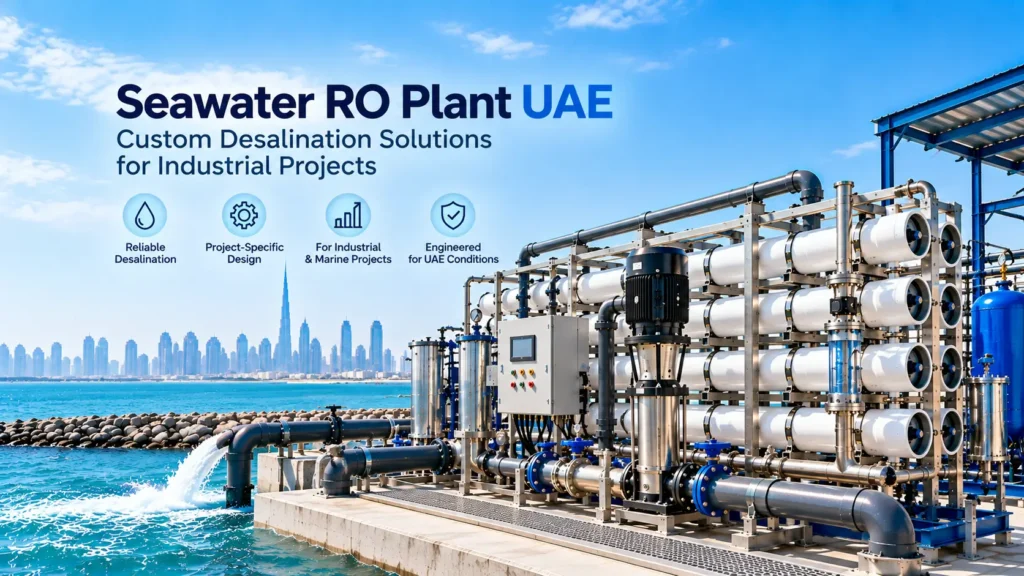
Seawater RO plant UAE for industrial desalination projects
نظام RO صناعي

seawater RO plant UAE

Looking for a seawater RO plant UAE solution? Seawater desalination requires a system designed for high salinity, water quality and project capacity. New Tech Water provides tailored SWRO solutions for coastal facilities, resorts and industrial projects, with a focus on efficient treatment, reliable performance and project-specific requirements. Seawater RO Plant UAE: When Does a Project Require an SWRO System? Seawater RO plant UAE requirements begin with the source water. When seawater is the primary feed source, the treatment system needs to address the characteristics and operating demands associated with high-salinity water. This affects more than membrane selection because pretreatment, pumping, materials, controls and overall system configuration may also need to be considered. A seawater reverse osmosis system may be evaluated for projects such as: Coastal facilities using seawater as a feed source. Marine and offshore applications. Resorts and hospitality projects with desalination requirements. Industrial sites requiring desalinated water. Remote projects where seawater is an available source. EPC projects with defined desalination specifications. The decision should be based on the actual feed-water analysis and the quality of water required after treatment. Buyers should therefore avoid selecting an SWRO system only by nominal capacity. Planning a seawater desalination project in the UAE? Send New Tech Water your available water analysis, required capacity and product-water target to discuss the appropriate SWRO configuration. Why High-Salinity Feed Water Changes SWRO Plant Design High-salinity feed water creates different design demands from lower-salinity water sources. In seawater reverse osmosis UAE projects, the system configuration needs to account for the characteristics of the source water as well as the pressure and treatment requirements associated with the selected RO process. Feed-water conditions can influence several areas of the design, including: Pretreatment configuration. Membrane selection. High-pressure pump requirements. Pressure-vessel configuration. Materials of construction. Recovery strategy. Instrumentation and monitoring. Chemical treatment where required. The design basis should therefore be clearly stated in the technical proposal. Two SWRO systems with similar nominal production capacities may require different configurations when the source-water conditions, site requirements or product-water targets are different. Have a high-salinity water source to treat? Share the available feed-water information with New Tech Water before selecting the final SWRO system configuration. Seawater Analysis Before Designing an SWRO Plant UAE Water analysis is an important starting point for a seawater RO system UAE project. Simply identifying the source as seawater does not provide enough information to finalize pretreatment, membrane configuration or other system requirements. Depending on the project, designers may need to review available information related to: Salinity or TDS. Conductivity. pH. Turbidity. Suspended solids. Hardness-related constituents. Silica. Iron and manganese where relevant. Other water-quality parameters required by the project. Potential variation in feed-water conditions. The required product-water quality is equally important. Water intended for an industrial process may have different requirements from water intended for another downstream application. The design should therefore connect the feed-water conditions with a clearly defined treatment target. Buyers can review New Tech Water’s water treatment plants while evaluating the broader treatment requirements of a project. Already have a seawater analysis? Send the available results and required product-water quality to New Tech Water for project-specific evaluation. Pretreatment Options for a Seawater Desalination Plant UAE Pretreatment is a critical part of a seawater desalination plant UAE design because RO membranes need feed water prepared for stable operation. The appropriate pretreatment process should be selected according to the source-water characteristics rather than copied from another project. Depending on the water analysis and project conditions, the pretreatment stage may need to address suspended matter, turbidity and other conditions that can affect downstream RO performance. Filtration and chemical treatment requirements, where applicable, should be determined from the treatment objective and design basis. When evaluating pretreatment, buyers should ask: What feed-water conditions is the pretreatment designed to handle? What is the basis for the selected treatment stages? How will pretreatment performance be monitored? What consumables or chemicals may be required? How does the pretreatment protect the downstream RO stage? What operating and maintenance requirements should be considered? An SWRO plant UAE proposal should therefore explain the relationship between source-water conditions, pretreatment and the reverse osmosis stage rather than presenting them as unrelated equipment packages. Need to define pretreatment for a seawater RO project? Share your feed-water conditions with New Tech Water to discuss the treatment stages required before RO. High-Pressure Pumps and SWRO Membrane Selection High-pressure pumping and membrane selection are central parts of an SWRO system. They should be evaluated as part of the complete process design rather than selected independently based only on brand or nominal capacity. When reviewing a high-pressure pump, project teams can consider its intended duty, compatibility with the system design, materials, operating requirements, efficiency and integration with the selected control strategy. SWRO membrane selection should likewise reflect the feed-water conditions, required product-water quality and overall membrane configuration. Buyers should review the technical basis used for membrane selection instead of assuming that the same membrane arrangement is appropriate for every seawater project. The pump, membranes, pressure vessels and controls need to work together within the design conditions. This is why component comparison should focus on both individual specifications and their role in the complete seawater treatment system UAE project. Comparing SWRO components for an upcoming project? Send New Tech Water your technical specification to discuss pumps, membranes and the overall RO configuration. Energy Recovery in Seawater Reverse Osmosis Systems Energy demand is an important consideration in seawater reverse osmosis because of the operating requirements associated with high-salinity feed water. For this reason, project teams may evaluate energy-recovery arrangements as part of the overall SWRO design. The purpose of energy recovery is to make use of energy available within the process rather than treating it only as a discharge stream. However, the suitability and configuration of an energy-recovery solution should be evaluated within the complete system design. Buyers should avoid relying on a single generic efficiency or savings figure when comparing proposals. Actual system performance can depend on the selected equipment, operating conditions, system configuration, recovery strategy

Industrial RO Plant Dubai
نظام RO صناعي

industrial RO plant Dubai

Looking for an industrial RO plant Dubai facilities can use for reliable process, production or utility water treatment? Selecting the right reverse osmosis system requires more than choosing a nominal capacity. Feed-water quality, TDS, required permeate quality, recovery, pretreatment and operating conditions all influence the final configuration. New Tech Water helps industrial and commercial projects evaluate these requirements and define an RO solution around the actual needs of the facility. Industrial RO Plant Dubai: What Should Buyers Define Before Requesting a Quote? Industrial RO plant Dubai projects should begin with a clear technical basis before buyers request quotations or compare equipment. The first step is to define the incoming water, required treated-water quality, actual water demand and operating conditions. These requirements influence system capacity, pretreatment, membrane configuration, instrumentation and the overall project scope. Before requesting an industrial RO system in Dubai, buyers should define as much of the following information as possible: Feed-water source. Available feed-water analysis. Feed TDS or conductivity. Required permeate-water quality. Required production capacity. Average daily water demand. Peak water demand. Operating hours. Available utilities. Space and site limitations. Required automation level. Installation and commissioning scope. Two facilities can require the same nominal permeate flow while needing different RO configurations because their feed-water conditions or final water-quality requirements differ. Establishing these inputs early gives procurement and engineering teams a stronger basis for comparing proposals. Planning an industrial RO project in Dubai? Send New Tech Water your water analysis, required capacity and target permeate quality to start defining the appropriate system. Where Industrial RO Plants Are Used Across Dubai Industrial and commercial facilities can use reverse osmosis when their incoming water and required final water quality make membrane treatment appropriate. The important point is not simply the type of facility but the specific water requirement at the point of use. Projects may include water treatment requirements for: Factories and manufacturing facilities. Food and beverage operations. Hotels and hospitality facilities. Warehouses and commercial facilities. Industrial process-water applications. Utility-water requirements. MEP and engineering projects. A factory RO system in Dubai, for example, may require a different permeate specification, operating schedule or level of monitoring from a commercial RO system used for another application. Industry type alone is therefore not enough to select the plant. Buyers should define what the treated water will be used for and what quality is required before selecting the treatment process. This keeps the system focused on the actual application instead of applying one standard configuration to every facility. Need an RO system for a factory, hotel or commercial facility in Dubai? Share the application and water requirements with New Tech Water for project-specific evaluation. Water Analysis Before Selecting an RO System in Dubai Water analysis is one of the most important inputs when developing an industrial RO plant in Dubai. It provides the technical information required to evaluate pretreatment, membrane operating conditions and other aspects of the proposed system. Depending on the source and project requirements, relevant parameters can include: TDS or conductivity. Hardness. Alkalinity. Silica. Iron. Manganese. Turbidity. pH. Other parameters relevant to the proposed RO process. TDS is important in reverse osmosis design, but it should not be considered in isolation. Hardness, silica, suspended matter and other water characteristics can influence pretreatment requirements and the operating conditions proposed for the membrane system. The required permeate quality is equally important. A reverse osmosis plant in Dubai should be evaluated from both directions: what is present in the feed water and what quality the facility needs after treatment. For general background on treatment processes used to improve water quality, buyers can review this overview of water purification. The final RO configuration should still be based on project-specific water data and operating requirements. Have a recent water analysis? Send it to New Tech Water with your required permeate quality so the RO treatment requirements can be evaluated around actual water conditions. Capacity, TDS and Recovery: The Three Numbers That Shape RO Design Capacity, feed-water TDS and recovery are important considerations when evaluating an RO water plant in Dubai, but they need to be understood within the complete design basis. A plant should not be selected from any one of these figures alone. Capacity planning should consider: Required permeate flow. Average daily water consumption. Peak demand. Operating hours per day. Product-water storage. Production schedules. Feed-water availability. Future demand where already defined. Feed-water TDS helps describe the dissolved-solids load entering the membrane process. Recovery describes the relationship between permeate production and feed flow. However, selecting a higher recovery without considering feed-water chemistry and membrane operating conditions is not automatically an improvement. For an industrial RO plant Dubai project, these variables should be evaluated together. The objective is to establish a system that can produce the required water quantity and quality under the facility’s actual operating conditions. Unsure what RO capacity your facility needs? Share your daily consumption, operating hours, feed-water data and target water quality with New Tech Water for technical evaluation. Pretreatment Requirements for an Industrial RO System in Dubai Pretreatment prepares the feed water for the RO membrane stage and should be selected according to the water analysis and proposed operating conditions. A generic pretreatment package should not automatically be applied to every industrial reverse osmosis system. Depending on the project, pretreatment may involve: Mechanical or media filtration. Activated carbon treatment where applicable. Hardness control or softening where required. Chemical dosing according to process requirements. Cartridge filtration. Other treatment stages justified by the feed-water conditions. The purpose of pretreatment is not to add unnecessary equipment. Each stage should address a defined water-quality condition or help establish appropriate feed conditions for downstream RO equipment. This is particularly important when comparing proposals from different suppliers. Two quotations can specify the same RO capacity while including very different pretreatment scopes because they are based on different assumptions or water data. For an industrial RO plant Dubai project, pretreatment should therefore be evaluated as part of the complete RO design rather than as an isolated equipment package. Do not

Industrial RO Plant UAE
نظام RO صناعي

industrial RO plant UAE

Looking for an industrial RO plant UAE facilities can use for reliable process or production water treatment? The right reverse osmosis system requires more than selecting a capacity. Feed-water quality, TDS, required permeate quality, pretreatment, recovery, operating conditions and equipment specifications all influence the final design. New Tech Water helps industrial facilities evaluate these requirements and develop RO solutions around the actual water quality and operational needs of each project. Industrial RO Plant UAE: When Is Reverse Osmosis the Right Choice? Industrial RO plant UAE projects should begin by confirming whether reverse osmosis is technically appropriate for the facility’s water source and required product-water quality. RO is used to reduce dissolved salts and other constituents that the membrane process is designed to reject, but the decision to use it should follow water analysis and a clear understanding of the intended application. Before selecting an industrial reverse osmosis system, the project team should define: The feed-water source. Available feed-water analysis. Feed conductivity or TDS. Required permeate-water quality. Required production capacity. Daily water demand. Operating hours. The intended industrial application. Available space and utilities. Relevant project or consultant specifications. An industrial RO system for a UAE facility should therefore be selected from a defined design basis rather than from capacity alone. Two facilities requiring similar permeate flow can need different pretreatment, membrane configurations, operating conditions or control requirements because their feed water and final water-quality targets differ. Reverse osmosis should also be considered as part of the complete water treatment process. Where pretreatment or other treatment stages are required, their role should be defined before the RO equipment is finalized. For a broader overview of treatment technologies and processes, readers can review this reference on water purification. Facilities still evaluating the broader supplier relationship can also review New Tech Water’s guide to choosing a water treatment company in the UAE before moving into the detailed RO specification. Considering RO for an industrial facility in the UAE? Send New Tech Water your feed-water analysis, required capacity and target permeate quality to discuss whether reverse osmosis fits your project. Feed Water TDS and Permeate Quality: Where RO Design Begins Feed-water quality establishes the conditions entering the RO system, while the required permeate quality defines the treatment objective. Both should be evaluated together before membrane configuration, pretreatment or operating conditions are selected. A water analysis can provide important design information such as: TDS or conductivity. Hardness. Alkalinity. Silica. Iron. Manganese. Turbidity. pH. Other parameters relevant to the proposed RO process. Feed TDS is important, but it should not be treated as the only design parameter. Scaling potential, suspended matter and other feed-water characteristics can influence pretreatment requirements and operating conditions. The required permeate quality also depends on the intended use. An RO water treatment plant used by an industrial facility in the UAE may have a different treatment target from another facility using RO-treated water for a different production or utility requirement. For an industrial RO plant UAE project, defining both feed-water conditions and the required permeate quality gives the engineering team a clearer basis for selecting the appropriate treatment configuration. Providing New Tech Water with representative water-analysis data and a clear permeate specification creates a stronger basis for evaluating the appropriate RO configuration. Have your feed-water analysis ready? Send it with your required permeate quality and application to New Tech Water for project-specific RO evaluation. How to Size an Industrial RO System for a UAE Facility Correct sizing begins with the amount of permeate the facility actually requires and how that demand changes during operation. Selecting an RO plant from a nominal hourly capacity alone can overlook daily consumption, operating hours, peak demand and storage requirements. Capacity planning should consider: Required permeate flow. Average daily treated-water consumption. Peak demand. Daily operating hours. Product-water storage. Feed-water availability. Recovery considerations. Production schedules. Future capacity requirements where already defined. A factory RO plant project in the UAE should balance production capacity with the facility’s operating schedule. If the system is undersized, it may not produce enough treated water during required operating periods. Oversizing, however, is not automatically better and can create unnecessary capital and operational requirements. Storage also affects sizing. In some projects, treated-water storage can help balance RO production with variations in demand, so plant capacity and storage should be evaluated together rather than independently. Capacity planning for an industrial RO plant UAE project should therefore connect permeate demand, operating hours and storage instead of relying on nominal flow alone. The objective is to define an industrial RO water system that a UAE facility can operate around real water demand instead of selecting equipment from a generic capacity figure. Need to determine the right RO capacity? Share your daily demand, operating hours, peak requirements and water analysis with New Tech Water for project-specific sizing discussions. Pretreatment Requirements Before an Industrial Reverse Osmosis System RO membrane performance depends heavily on the condition of the water entering the membrane stage. Pretreatment should therefore be selected according to feed-water characteristics and the requirements of the proposed RO process. Depending on the project, pretreatment may involve: Mechanical or media filtration. Hardness control or softening where required. Activated carbon treatment where applicable. Chemical dosing according to process requirements. Cartridge filtration. Other treatment stages justified by the feed-water conditions. There is no single pretreatment configuration suitable for every industrial RO plant UAE project. A system treating one water source may require a different approach from a plant with another source or water chemistry. Pretreatment should address identified risks rather than simply adding equipment. The objective is to establish appropriate feed conditions for the membrane stage and support stable operation of the complete treatment process. This is why water analysis should come before the final pretreatment specification. Without adequate feed-water information, suppliers may base their proposals on assumptions that do not accurately represent the project. Do not specify RO pretreatment by assumption. Send New Tech Water your water analysis so the pretreatment requirements can be evaluated alongside the membrane stage. RO Membranes,

نظام RO صناعي
نظام RO صناعي

نظام RO صناعي اطلب أفضل حلول تحلية المياه للمصانع الآن

في عالم الصناعة، لا تُعد جودة المياه مجرد عامل مساعد، بل عنصرًا أساسيًا يؤثر بصورة مباشرة في جودة المنتج النهائي، وكفاءة خطوط الإنتاج، والعمر التشغيلي للمعدات وهنا يظهر نظام RO صناعي باعتباره الحل الأكثر اعتمادًا للحصول على مياه عالية النقاء تلبي متطلبات مختلف القطاعات الصناعية سواء كنت تدير مصنعًا للأغذية أو الأدوية أو الصناعات الكيميائية، فإن اختيار النظام المناسب يمنحك أداءً أفضل، وتكاليف تشغيل أقل، وحماية حقيقية لاستثماراتك في هذا المقال ستتعرف على آلية عمل النظام، وأهم مميزاته، وكيفية اختياره، وأبرز استخداماته، بالإضافة إلى نصائح تساعدك على اتخاذ قرار شراء ناجح. ما هو نظام RO صناعي ولماذا تعتمد عليه المصانع؟ يُعد نظام RO صناعي من أكثر تقنيات معالجة المياه تطورًا، حيث يعتمد على أغشية دقيقة تفصل الأملاح الذائبة والشوائب والمعادن الثقيلة والبكتيريا والملوثات للحصول على مياه فائقة النقاء ويتميز هذا النظام بقدرته على تلبية احتياجات المنشآت الصناعية التي تحتاج إلى مياه مطابقة للمواصفات القياسية، مما ينعكس على جودة الإنتاج وتقليل الأعطال الناتجة عن ترسب الأملاح داخل المعدات كما يساعد في خفض تكاليف الصيانة، وزيادة كفاءة التشغيل، وتحسين استدامة العمليات الصناعية، ولذلك أصبح الخيار الأول للعديد من المصانع التي تبحث عن الاعتمادية والأداء طويل الأمد. يعتمد على تقنية الأغشية شبه المنفذة. يزيل نسبة كبيرة من الأملاح الذائبة. يقلل ترسبات الكلس داخل المعدات. يحسن جودة المنتج النهائي. يخفض تكاليف الصيانة والتشغيل. يناسب مختلف أحجام المصانع. يعمل بكفاءة مع مصادر مياه متنوعة. كيف يعمل نظام التناضح العكسي الصناعي؟ يعتمد نظام التناضح العكسي الصناعي على ضخ المياه تحت ضغط مرتفع عبر أغشية متخصصة تسمح بمرور جزيئات الماء فقط، بينما تمنع مرور الأملاح والملوثات تمر المياه قبل ذلك بمراحل معالجة أولية لحماية الأغشية وإطالة عمرها التشغيلي، ثم تُجمع المياه النقية في خزان مخصص للاستخدام الصناعي، بينما يتم التخلص من المياه المحملة بالأملاح بصورة منفصلة. مرحلة الفلاتر الأولية. إزالة الكلور والرواسب. الضغط عبر الأغشية. فصل الأملاح والشوائب. إنتاج مياه عالية النقاء. التخلص من المياه المركزة بالأملاح. اقراء المزيد عن : تصميم محطات RO باحتراف اطلب أفضل نظام تحلية الآن أهم مميزات نظام زيرو أملاح للمصانع يمنح نظام زيرو أملاح المنشآت الصناعية جودة مياه استثنائية تلبي أعلى معايير التشغيل والإنتاج كما يساعد في حماية المعدات من التآكل والترسبات، ويقلل من استهلاك المواد الكيميائية المستخدمة في المعالجة، مما يحقق وفورات تشغيلية كبيرة على المدى الطويل ويضمن استقرار جودة المياه بشكل مستمر. إزالة الأملاح الذائبة بكفاءة عالية. حماية خطوط الإنتاج. تقليل الأعطال. تحسين جودة المنتجات. تقليل استهلاك الطاقة. إطالة عمر المعدات. سهولة التشغيل والصيانة. استخدامات أنظمة RO للمصانع تُستخدم أنظمة RO للمصانع في العديد من القطاعات الصناعية التي تعتمد على مياه عالية النقاء لضمان جودة الإنتاج واستمرارية التشغيل ويُعد نظام مياه المصانع المعتمد على تقنية RO الحل الأمثل لتوفير مياه مطابقة للمواصفات المطلوبة، سواء في الصناعات الغذائية أو الدوائية أو الكيميائية أو غيرها كما يمكن تصميم النظام وفقًا لمعدل استهلاك المياه وطبيعة النشاط الصناعي، مما يضمن أعلى كفاءة تشغيلية ويقلل من تكاليف الصيانة واستهلاك الموارد. مصانع الأغذية والمشروبات. مصانع الأدوية. الصناعات الكيميائية. الصناعات الإلكترونية. مصانع مستحضرات التجميل. محطات الغلايات وأنظمة التبريد. مصانع التعبئة والتغليف. جميع المنشآت التي تحتاج إلى نظام مياه المصانع عالي الكفاءة والجودة. اقراء المزيد عن : صيانة محطات RO باحتراف اطلب الخدمة الآن بأفضل سعر كيف تختار أفضل وحدات RO؟ اختيار أفضل وحدات RO لا يعتمد على السعة الإنتاجية فقط، بل يتطلب تقييمًا دقيقًا لجودة المكونات، وكفاءة الأغشية، واستهلاك الطاقة، ومدى توافق النظام مع طبيعة المياه واحتياجات المصنع فالاستثمار في وحدة عالية الجودة يضمن استقرار الأداء، ويقلل تكاليف التشغيل والصيانة، ويطيل العمر الافتراضي للمعدات، مما يحقق أعلى عائد على الاستثمار ويضمن إنتاج مياه نقية تلبي متطلبات التشغيل بكفاءة واستمرارية. حدد الطاقة الإنتاجية المناسبة لاحتياجات المصنع. اختر أغشية RO أصلية عالية الكفاءة. تأكد من جودة المضخات ومكونات النظام. راجع معدل استهلاك الكهرباء والمياه. تحقق من سهولة الصيانة وتوافر قطع الغيار. اختر موردًا يقدم ضمانًا وخدمة ما بعد البيع. اطلب تحليلًا لمصدر المياه قبل تحديد المواصفات. قارن بين الأنظمة من حيث الكفاءة والتكلفة التشغيلية، وليس سعر الشراء فقط. لماذا تعتبر محطة RO صناعية استثمارًا ناجحًا؟ لا يقتصر دور محطة RO صناعية على إنتاج مياه عالية النقاء، بل تمثل استثمارًا استراتيجيًا ينعكس على كفاءة المصنع وربحيته على المدى الطويل فبفضل قدرتها على تقليل استهلاك المياه، وخفض تكاليف الصيانة، وحماية المعدات من التآكل والترسبات، تساعد المحطة على تقليل الأعطال غير المخطط لها وتحسين استمرارية الإنتاج كما تضمن ثبات جودة المياه المستخدمة في العمليات الصناعية، مما يرفع جودة المنتجات النهائية ويعزز التزام المصنع بالمعايير البيئية والصناعية، ليحقق عائدًا استثماريًا مرتفعًا مع مرور الوقت. تخفض تكاليف التشغيل والصيانة. تحمي المعدات من الترسبات والتآكل. تقلل استهلاك المياه والطاقة. ترفع كفاءة خطوط الإنتاج. تحسن جودة المنتج النهائي. تقلل الأعطال والتوقفات المفاجئة. تدعم الالتزام بالمواصفات والمعايير الصناعية. تحقق عائدًا استثماريًا طويل الأجل للمصنع. اقراء المزيد عن : سعر محطة تحلية مياه اطلب عرض سعر الآن بأفضل قيمة كيف يدعم نظام تحلية المياه الصناعي جودة الإنتاج؟ يلعب نظام تحلية المياه الصناعي دورًا محوريًا في رفع جودة الإنتاج داخل المصانع، لأنه يوفر مياهًا مستقرة المواصفات وخالية من الأملاح والشوائب التي قد تؤثر في العمليات التصنيعية أو تتسبب في تلف المعدات. ويساعد النظام على الحفاظ على كفاءة خطوط الإنتاج وتقليل نسب المنتجات المعيبة، كما يضمن توافق المياه مع المعايير المطلوبة في الصناعات الغذائية والدوائية والكيميائية وغيرها. ونتيجة لذلك، يحقق المصنع إنتاجًا أكثر استقرارًا، ويخفض تكاليف التشغيل، ويعزز ثقة العملاء في جودة المنتجات النهائية. يوفر مياه عالية النقاء لجميع مراحل الإنتاج. يحافظ على ثبات جودة المنتج النهائي. يقلل نسب الهدر والمنتجات المعيبة. يحمي المعدات من التآكل والترسبات. يرفع كفاءة خطوط الإنتاج واستمرارية التشغيل. يقلل الحاجة إلى الصيانة المتكررة. يساعد على الالتزام بالمواصفات والمعايير الصناعية. يعزز كفاءة التشغيل ويخفض التكاليف على المدى الطويل. ما الفرق بين نظام تنقية المياه الصناعية وحلول RO الصناعية؟ يعتمد نظام تنقية المياه الصناعية على مجموعة من تقنيات المعالجة التي تختلف حسب طبيعة المياه، بينما تُعد حلول RO الصناعية من أكثر الحلول كفاءة عندما يكون الهدف إزالة الأملاح الذائبة وإنتاج مياه عالية النقاء، لذلك يتم اختيار التقنية المناسبة وفقًا لتحليل المياه واحتياجات المصنع. اختلاف تقنيات المعالجة. تنوع مستويات التنقية. اختلاف الاستخدامات. توافق الحل مع جودة المياه. سهولة التوسع مستقبلًا. تحسين كفاءة التشغيل. اقراء المزيد عن : تكلفة محطة تحلية مياه صغيرة في مصر اعرف السعر الآن كيف تختار أجهزة RO الصناعية المناسبة؟   يتطلب اختيار أجهزة RO الصناعية دراسة احتياجات المصنع بدقة، بدءًا من جودة مصدر المياه ومعدل الاستهلاك اليومي، وصولًا إلى الطاقة الإنتاجية المطلوبة ومستوى النقاء المستهدف كما

arArabic
Scroll to Top