
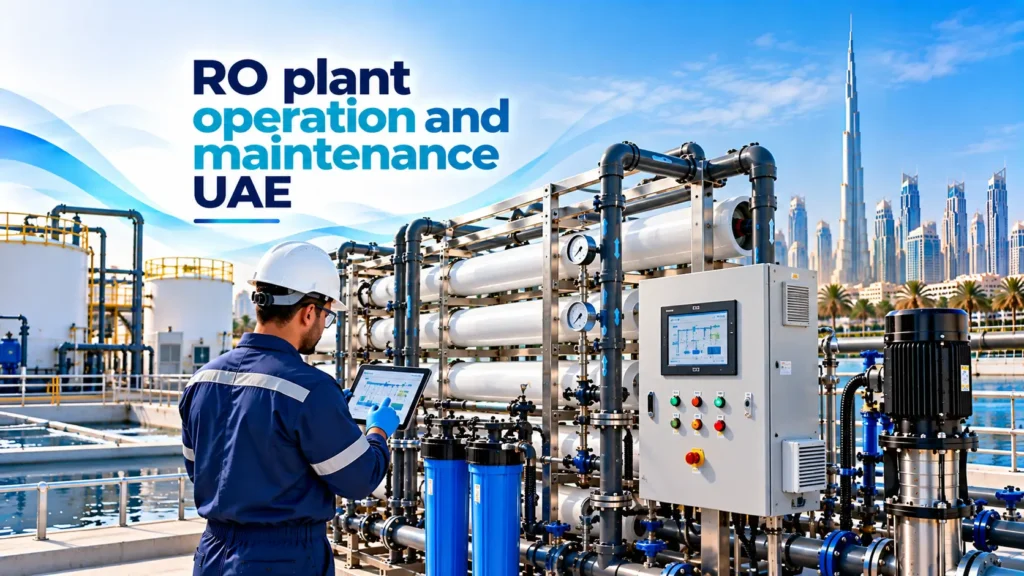
RO plant operation and maintenance UAE
Does your industrial reverse osmosis system deliver consistent water quality without unexpected interruptions? RO plant operation and maintenance UAE services can help facilities organize daily monitoring, preventive maintenance and performance management. A structured approach supports reliable production, protects critical components and reduces the operational risks associated with unplanned equipment failures. New Tech Water provides industrial water treatment systems, reverse osmosis equipment and related technical solutions. For factories, hotels, developers and facility management companies, effective RO operation requires more than occasional repairs. It requires accurate records, suitable operating procedures and a maintenance plan built around the actual plant conditions. RO Plant Operation and Maintenance UAE: What an O&M Contract Should Cover For RO plant operation and maintenance UAE projects, a successful contract begins with clearly defined responsibilities. The agreement should explain who operates the equipment, records performance data, manages consumables, performs preventive maintenance and responds when technical problems occur. Facilities should also identify whether the arrangement covers routine supervision, scheduled site visits or full-time operation. These service models have different staffing requirements, costs and responsibilities. Essential Responsibilities in an RO O&M Contract Routine operation and supervision of the RO system. Daily monitoring of water quality and production. Recording feed, permeate and concentrate flow rates. Preventive maintenance for pumps, filters and instruments. Inspection of chemical dosing and pretreatment systems. Monitoring membrane performance and cleaning requirements. Reporting faults, alarms and corrective actions. Planning consumables and critical spare parts. Preparing operating and maintenance reports. Defining emergency response arrangements where available. Establish Clear Performance Targets A useful contract should identify measurable operating targets, such as permeate production, treated-water conductivity, system availability and maintenance completion. These targets must reflect the original plant design, feed-water quality and agreed operating conditions. Performance commitments should not be based on ideal conditions that the facility cannot consistently maintain. Changes in feed-water salinity, temperature or production demand can affect the system’s achievable output. Clarify Commercial Responsibilities Before approving an O&M proposal, determine whether chemicals, filter cartridges, membrane cleaning, replacement parts and emergency visits are included. Major repairs and equipment upgrades may require separate authorization. New Tech Water can discuss industrial RO equipment and technical requirements. Buyers should confirm the availability and contractual scope of on-site operation services for their specific UAE location. Planning an RO operation and maintenance contract? Contact New Tech Water with your plant capacity, operating hours and required technical scope. Daily Operating Checks, Logs and Performance Trending Daily monitoring is essential for detecting changes before they develop into expensive equipment problems. Operators should record consistent measurements and compare them with an established operating baseline. A structured RO plant operation and maintenance UAE program should make these records accessible to maintenance engineers and facility managers. Reliable information helps teams understand whether a change results from normal operating conditions or a developing fault. Essential Daily RO Operating Parameters Feed-water temperature and conductivity. Feed pressure and high-pressure pump discharge pressure. Permeate conductivity or TDS. Feed, permeate and concentrate flow rates. System recovery percentage. Differential pressure across membrane stages. Chemical dosing rates and storage levels. Cartridge-filter pressure drop. Motor operating condition and electrical readings. Alarms, shutdowns and unusual observations. Why Normalized Membrane Performance Matters Permeate production changes with feed-water temperature, pressure and salinity. A lower flow reading does not automatically mean that the membranes require cleaning or replacement. Normalized performance data allows engineers to compare membrane behavior under reference conditions. This improves the reliability of long-term trend analysis and supports better maintenance decisions. Identify Problems Through Performance Trends Gradual increases in differential pressure may indicate fouling, while changes in salt rejection can suggest membrane or seal problems. However, individual measurements should not be interpreted without reviewing the wider operating conditions. For RO plant operation and maintenance UAE facilities should review trends regularly rather than waiting for a major alarm. Early investigation can reduce unnecessary component replacement and unexpected downtime. Prepare Useful Operating Reports Daily and periodic reports should summarize production, water quality, equipment condition, alarms and completed maintenance activities. Reports should also identify unresolved problems and recommended corrective actions. Facility managers benefit from clear reporting because it supports budgeting, contractor supervision and decisions about future equipment requirements. Need more reliable RO operating records and monitoring equipment? Contact New Tech Water with your system specifications and performance concerns. Chemical Dosing, Pretreatment and Membrane Protection Reliable membrane performance begins before water reaches the RO elements. Inadequate pretreatment can increase particulate fouling, mineral scaling and cleaning frequency. For RO plant operation and maintenance UAE applications, operators should review feed-water analysis, pretreatment performance and chemical dosing together. These activities help protect membranes and maintain stable operating conditions. Maintain Effective Pretreatment Industrial RO systems may use multimedia filters, activated carbon, softeners, cartridge filters or other pretreatment technologies. The appropriate combination depends on feed-water quality and the membrane system design. Filter pressure drop, backwashing performance and media condition should be monitored according to equipment requirements. A restriction upstream of the RO system can affect feed pressure and overall production. Verify Chemical Dosing Accuracy Antiscalant dosing is commonly used in suitable RO applications to manage mineral scaling risk. Chemical selection and dosage should follow water analysis, recovery requirements and membrane compatibility. Operators should inspect dosing pumps, chemical tanks, injection lines and calibration settings. Incorrect dosing may increase operating costs or leave membranes insufficiently protected. Protect Membranes During Operation Membranes should operate within the pressure, temperature, pH and recovery limits specified by their manufacturer. Changes in feed-water quality may require a review of operating settings and chemical treatment. Shutdown and preservation procedures are also important. Extended periods without operation can create additional risks if the membranes are not protected according to the applicable technical instructions. Use Manufacturer Guidance for Membrane Cleaning Membrane cleaning should be based on normalized performance trends and the likely type of fouling. Cleaning solutions, temperatures and procedures must be compatible with the installed membrane elements. For further technical guidance, consult the DuPont Water Solutions technical resources. Manufacturer recommendations should take priority over generic cleaning intervals. New Tech Water supplies industrial treatment equipment and related components.

 English
 Arabic