newtech-water.com

Author name: content

RO Membrane 8040 Supplier UAE with industrial reverse osmosis membrane elements and filtration systems
صيانة محطات RO

RO Membrane 8040 Supplier UAE | New Tech Water

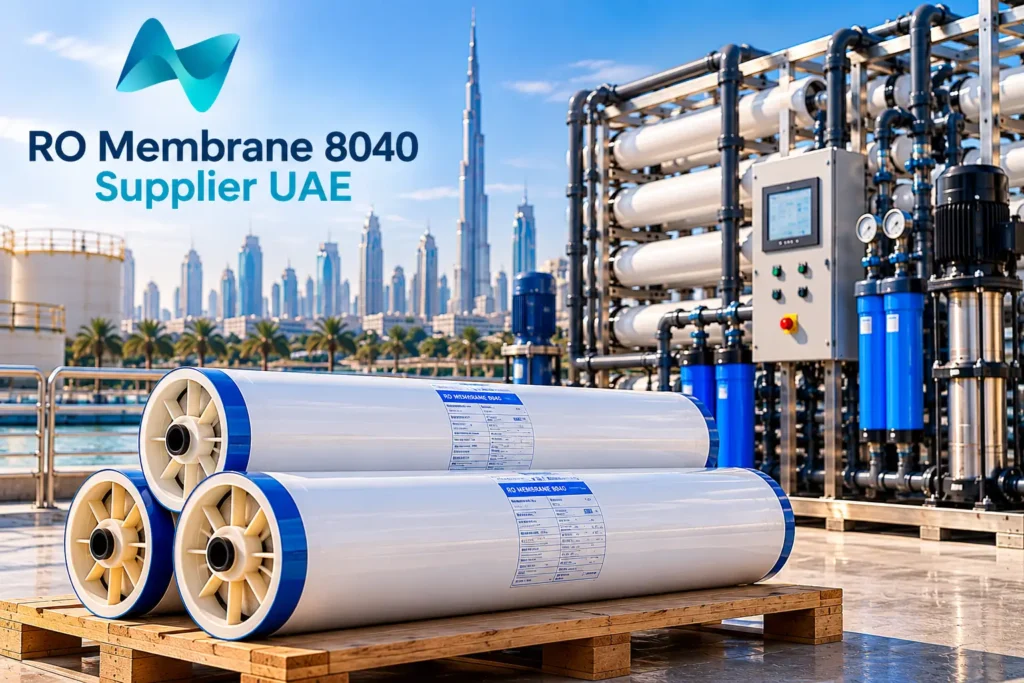
Are you searching for an RO membrane 8040 supplier UAE industrial facilities can contact for reliable membrane selection and replacement? Choosing the right 8-inch reverse osmosis element requires more than matching its dimensions. Salt rejection, permeate flow, feed-water quality, operating pressure and compatibility with the existing RO system all influence long-term performance. New Tech Water supports industrial water treatment requirements through its equipment and treatment solutions. If your business needs an RO membrane 8040 supplier UAE procurement teams can approach for a technical quotation, understanding the correct membrane specifications is the first step toward avoiding purchasing errors and unnecessary downtime. What UAE Buyers Need to Know Before Ordering 8040 RO Membranes An 8040 reverse osmosis membrane is an industrial membrane element with nominal dimensions of approximately 8 inches in diameter and 40 inches in length. These elements are commonly used in industrial RO plants, desalination systems and process-water treatment applications. However, the 8040 designation identifies the approximate physical format rather than the membrane’s complete performance characteristics. Different manufacturers offer elements with varying salt rejection, rated flow, pressure limits and intended applications. Essential Specifications for an 8040 Membrane Inquiry Before contacting an RO membrane 8040 supplier UAE buyers should prepare the technical details needed to identify the correct product. These include: Existing membrane manufacturer and model number. Required membrane quantity and nominal dimensions. Feed-water source and intended treatment application. Feed-water TDS and available water analysis. Operating pressure and temperature. Required permeate flow and water quality. Pressure vessel and interconnector specifications. Project location and required delivery timeframe. Why Exact Membrane Identification Matters Two membranes with identical nominal dimensions may behave differently under the same operating conditions. Differences in membrane construction, hydraulic characteristics and performance specifications can affect the complete RO array. For replacement projects, buyers should begin with the original membrane datasheet and the plant’s operating requirements. If an alternative manufacturer is being considered, technical compatibility must be evaluated before ordering. Compare Technical Value Instead of Price Alone The lowest quoted price does not necessarily represent the best purchasing decision. A technically unsuitable membrane may create additional operating costs or fail to meet the required treated-water quality. New Tech Water can receive inquiries for industrial RO equipment and related solutions. Buyers should confirm the exact product model, availability, warranty conditions and delivery arrangements when requesting a quotation. Need an accurate quotation for industrial 8040 RO membranes? Contact New Tech Water with your membrane model, quantity and operating specifications. 8040 RO Membrane UAE Applications in Industrial Systems Industrial 8040 membranes are widely associated with reverse osmosis systems designed for substantial treated-water production. Their suitability depends on the source-water characteristics, required permeate quality and overall plant configuration. Businesses looking for an RO membrane 8040 supplier UAE should identify the intended application before comparing membrane models. A membrane selected for brackish groundwater may not be suitable for seawater desalination or another industrial water source. Industrial Process-Water Treatment Manufacturing facilities may require treated water for production processes, utilities, equipment protection and other industrial operations. The required water quality varies according to the application. Membrane selection should therefore consider the target permeate conductivity, expected production rate and feed-water conditions. Stable pretreatment and suitable operating controls also contribute to consistent performance. Brackish Groundwater Treatment Brackish groundwater RO plants may use 8040 membranes selected for the relevant salinity range and operating pressure. These systems often require pretreatment to manage suspended solids, hardness and other contaminants that contribute to membrane fouling or scaling. Before ordering a replacement element, review the water analysis and existing RO design. The membrane must operate within the limits of the complete system rather than simply fit inside the pressure vessel. Seawater Desalination Applications Seawater desalination requires membranes designed for higher-salinity feed water and the associated operating conditions. Not every 8040 membrane is suitable for seawater treatment. Buyers should compare the manufacturer’s stated application, pressure limits and performance data before making a selection. New Tech Water also provides information about its industrial water treatment plant solutions, helping buyers consider membrane requirements within the wider treatment process. Planning an industrial RO system using 8-inch membranes? Contact New Tech Water with your feed-water analysis and required production capacity. Brackish Water vs Seawater 8040 Membranes One of the most important decisions in industrial membrane procurement is selecting the correct membrane category for the feed-water salinity and operating conditions. An RO membrane 8040 supplier UAE procurement departments contact should receive clear information about whether the system treats brackish groundwater, seawater or another industrial water source. Brackish Water 8040 Membranes Brackish water membranes are designed for applications within their specified feed-water and operating limits. Their actual performance depends on salinity, temperature, pressure, recovery and water chemistry. These elements may be used in suitable groundwater and process-water treatment systems. The manufacturer’s datasheet should be consulted to confirm the intended operating range. Seawater 8040 Membranes Seawater membranes are designed for higher-salinity applications and typically require different operating conditions from brackish water elements. They must be evaluated for appropriate salt rejection, pressure capability and compatibility with the RO plant. Substituting a brackish water membrane into a seawater system without engineering verification can result in unsuitable performance. Why Feed-Water Analysis Is Essential Total dissolved solids provide useful information, but TDS alone is not enough to define every membrane requirement. The presence of scaling compounds, suspended solids and other contaminants can influence membrane selection and pretreatment design. When approaching an RO membrane 8040 supplier UAE industrial buyers should provide a recent water analysis whenever possible. This allows the purchasing discussion to focus on the correct membrane category and technical specifications. Unsure whether your system needs brackish water or seawater 8040 membranes? Share your water analysis with New Tech Water and request a technical quotation. Salt Rejection, Permeate Flow and Operating Pressure Membrane performance should be assessed using more than a single specification. Salt rejection, permeate flow and operating pressure are closely related to the treated-water quality and production requirements of an industrial RO system. For buyers comparing an RO membrane 8040 supplier UAE quotation, manufacturer
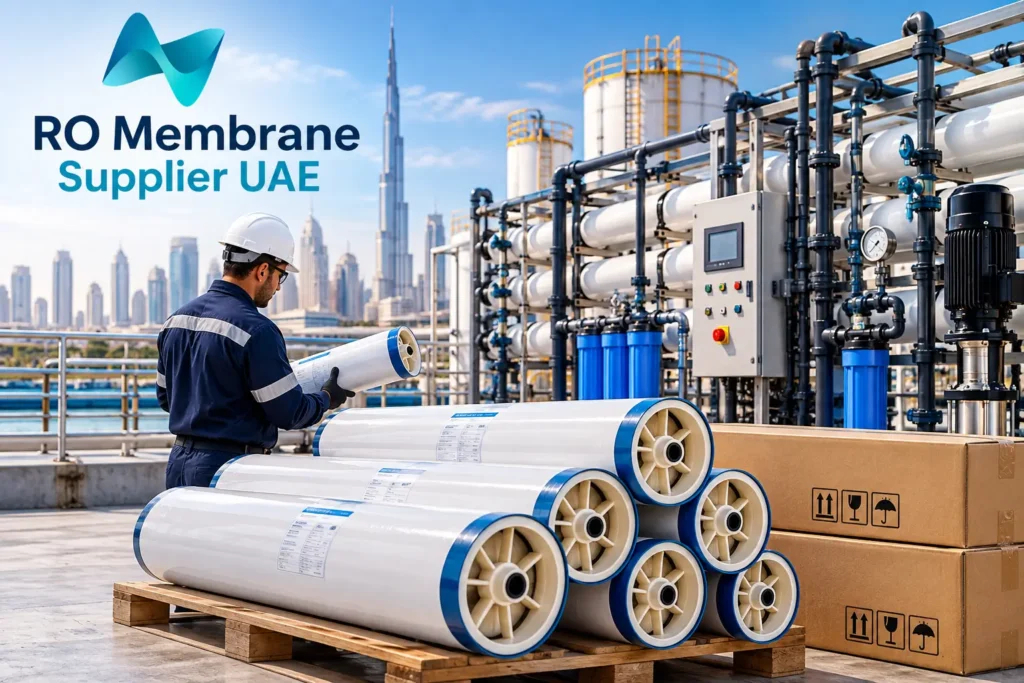
RO Membrane Supplier UAE with industrial reverse osmosis membranes and water treatment equipment
محطات التناضح العكسي

RO Membrane Supplier UAE

Searching for an RO membrane supplier UAE industrial projects can depend on for accurate specifications and compatible replacement elements? Selecting the right reverse osmosis membrane is essential for maintaining water quality, production capacity and efficient operation. The correct choice depends on feed-water chemistry, pressure requirements, membrane performance and compatibility with the existing treatment system. New Tech Water provides industrial water treatment equipment and related technical solutions. Whether you are purchasing membranes for a new RO plant or replacing elements in an existing installation, the right specifications can help reduce operating problems, avoid unnecessary replacements and support consistent treated-water production. How to Evaluate an RO Membrane Supplier in the UAE Choosing an RO membrane supplier UAE procurement teams can approach with confidence requires more than comparing prices. Industrial buyers should evaluate product specifications, technical documentation, compatibility requirements and commercial terms before placing an order. A reliable purchasing process starts with the membrane’s intended application. Brackish water, seawater and industrial process water can require different membrane characteristics. Selecting an element based only on its physical dimensions may create performance problems. RO Membrane Supplier UAE: Essential Purchasing Criteria Membrane manufacturer and exact model number. Element dimensions and intended application. Rated permeate flow and salt rejection. Operating pressure and temperature limits. Feed-water quality and pretreatment requirements. Compatibility with existing pressure vessels and seals. Manufacturer datasheets and installation instructions. Warranty conditions and available technical documentation. Confirmed stock status and delivery lead time. Check Technical Compatibility Before Ordering An industrial RO membrane may fit an existing pressure vessel without matching the original system’s hydraulic performance. Differences in membrane permeability, rejection or operating limits can affect the entire treatment process. For this reason, an RO membrane supplier UAE buyers contact should receive the original model number, plant operating data and water quality requirements. These details help establish whether a proposed replacement is suitable. Compare Total Procurement Value Price is important, but a cheaper membrane may not provide the required operating performance. Procurement teams should compare product specifications, documentation, compatibility, warranty terms and delivery arrangements. New Tech Water can discuss industrial RO equipment requirements and relevant replacement components. Buyers should confirm the available membrane models and commercial terms for each project. Need an industrial RO membrane quotation? Contact New Tech Water with your membrane model, required quantity and water treatment application. Brackish Water, Seawater and Low-Energy RO Membrane Applications Different water sources require different membrane specifications. When comparing an RO membrane supplier UAE facilities should begin by identifying the feed-water characteristics and required product-water quality. Membranes used for brackish water treatment may not be appropriate for seawater desalination. Similarly, a low-energy membrane should not be selected without checking its salt rejection and operating limits. Brackish Water RO Membranes Brackish water membranes are commonly used for groundwater treatment, industrial water production and selected commercial applications. Their suitability depends on feed salinity, operating pressure, recovery and the required permeate quality. Proper pretreatment remains essential. Suspended solids, hardness and other contaminants can affect membrane performance even when the feed-water TDS is within the intended operating range. Seawater RO Membranes Seawater desalination generally requires membranes designed for higher salinity and corresponding operating conditions. Salt rejection, pressure capability and system compatibility are particularly important. Buyers should review the original plant design before selecting a seawater membrane. The membrane, pressure vessel, pumps and associated equipment must be suitable for the intended duty. Low-Energy RO Membranes Some membrane designs are developed to achieve specified performance at comparatively lower operating pressures. These elements may be relevant where energy efficiency is an important purchasing consideration. However, lower-pressure operation does not guarantee suitability for every feed-water source. Actual performance depends on water chemistry, temperature, recovery and the required treated-water quality. Industrial Process Water Applications Manufacturing facilities may require treated water that meets defined conductivity or process-quality requirements. Membrane selection should therefore reflect the final application rather than the water source alone. New Tech Water provides industrial water treatment solutions. Explore its water treatment equipment and services when planning an RO system or reviewing replacement components. Need membranes for brackish water, seawater or industrial process water? Contact New Tech Water with your feed-water analysis and required treatment capacity. How Feed TDS and Operating Pressure Affect Membrane Selection Feed-water chemistry plays a major role in membrane selection. An RO membrane supplier UAE industrial buyers evaluate should consider salinity, scaling potential, operating pressure and required product-water quality before recommending an element. Total dissolved solids provide useful information, but TDS alone does not describe every condition affecting membrane performance. A detailed water analysis supports more accurate technical decisions. Feed-Water TDS and Water Chemistry Higher salinity generally increases the osmotic pressure that an RO system must overcome. However, mineral composition also matters. Calcium, sulfate, silica and other dissolved substances can influence scaling risk and recovery limits. Two water sources with similar TDS values may require different pretreatment arrangements. Buyers should provide a recent water analysis rather than relying on a single conductivity measurement. Operating Pressure and Membrane Limits Reverse osmosis uses applied pressure to produce permeate. The appropriate operating pressure depends on feed-water salinity, membrane characteristics and system design. Membranes must operate within their specified pressure and temperature limits. Selecting an element with unsuitable operating characteristics may affect production and increase equipment stress. Salt Rejection and Permeate Quality Salt rejection indicates how effectively a membrane reduces dissolved salts. Manufacturer specifications are typically measured under defined test conditions, so actual plant performance may differ. Buyers should compare the stated rejection characteristics with their required permeate quality and operating conditions. The membrane should also be compatible with the plant’s hydraulic configuration. Consider Pretreatment and Recovery Membrane performance depends on the entire treatment process. Inadequate pretreatment or unsuitable recovery settings can increase fouling and scaling even when the membrane itself is correctly specified. For an accurate quotation from an RO membrane supplier UAE procurement teams should include feed-water analysis, required production capacity, operating pressure and target permeate quality. Not sure which RO membrane specification matches your water source? Send New Tech Water your feed-water analysis

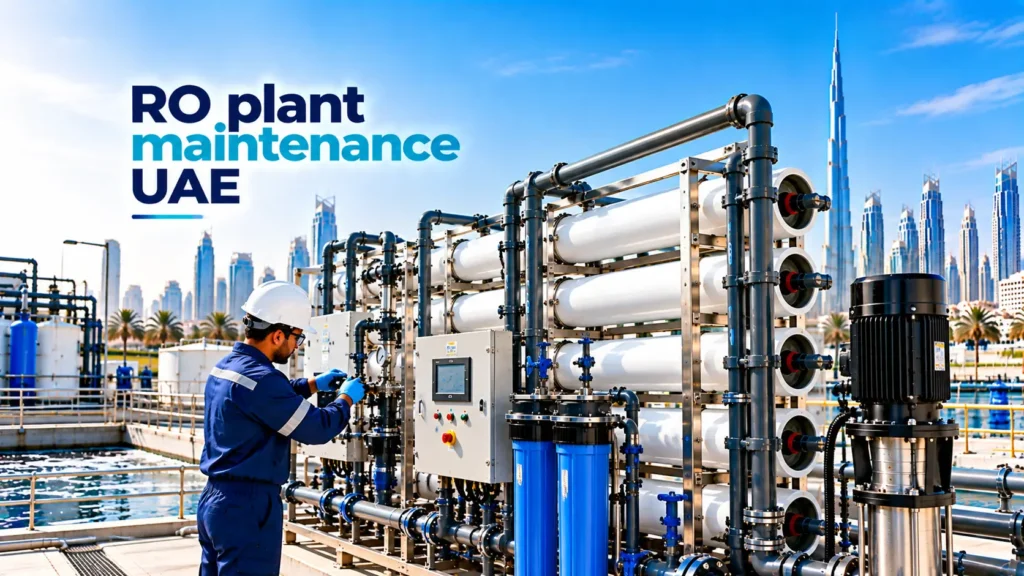
RO plant maintenance UAE with technician inspecting industrial reverse osmosis equipment
صيانة وتشغيل محطات المياه

RO plant maintenance UAE

Is your reverse osmosis system producing less water, showing higher TDS readings or requiring frequent repairs? RO plant maintenance UAE industrial facilities depend on helps identify these problems before they disrupt daily operations. A structured maintenance approach protects membrane performance, supports reliable water quality and reduces avoidable equipment downtime. New Tech Water provides industrial water treatment systems, reverse osmosis equipment and maintenance solutions for factories and commercial facilities. Whether your plant requires routine inspection, membrane cleaning or technical troubleshooting, understanding its operating condition is the first step toward an effective maintenance plan. RO Plant Maintenance UAE: When Preventive Servicing Becomes Essential RO plant maintenance UAE facilities require should follow a preventive schedule rather than begin only after equipment fails. Routine inspections help identify membrane fouling, unstable pressure, filtration problems and worn components before they interrupt water production. The appropriate maintenance frequency depends on operating hours, feed-water quality, system capacity and pretreatment performance. An industrial RO plant running continuously may require closer monitoring than a system operating only a few hours per day. RO Plant Maintenance UAE: Why Preventive Servicing Matters Preventive servicing protects the complete treatment process, not just the membranes. When pumps, filters, chemical dosing equipment and instruments operate correctly, the plant is better positioned to maintain its intended production capacity. Identify membrane fouling and scaling before performance deteriorates significantly. Reduce the likelihood of unexpected shutdowns. Maintain more consistent permeate flow and water quality. Detect pump, valve and instrumentation problems early. Plan consumable replacement before critical components fail. Monitor chemical consumption and operating efficiency. Improve maintenance budgeting through documented service records. Which Facilities Need Closer RO Maintenance Monitoring? Factories using treated water in production often require consistent water quality and predictable output. Hotels, commercial buildings and other facilities may also depend on RO systems for specific utility or process applications. Facilities with variable feed-water quality, high operating hours or limited backup capacity should pay particular attention to preventive maintenance. New Tech Water can help buyers review relevant water treatment equipment and discuss suitable maintenance requirements. Protect your RO system from avoidable operating problems. Contact New Tech Water with your plant capacity, operating schedule and maintenance requirements. Performance Indicators That Show an RO System Needs Service Changes in RO performance often appear in operating records before a major failure occurs. Monitoring flow, conductivity, pressure and recovery helps maintenance teams distinguish normal operating variations from developing technical problems. Effective RO plant maintenance UAE operators plan should include regular data collection and comparison against a reliable baseline. This makes it easier to identify gradual membrane deterioration and sudden equipment faults. Common Warning Signs of RO Performance Problems Reduced permeate production at comparable operating conditions. Higher product-water conductivity or TDS. Increasing differential pressure across membrane stages. Unexpected changes in feed or concentrate pressure. Frequent pump trips and electrical alarms. Unusual vibration, noise or leakage. Increasing chemical consumption. Unstable recovery or inconsistent flow readings. Why Normalized Permeate Flow Matters Permeate flow naturally changes with water temperature, pressure and feed-water composition. A lower flow reading does not automatically mean that membranes are fouled. Normalized permeate flow adjusts operating measurements to a reference condition. This allows engineers to compare current membrane performance with earlier readings more accurately. For example, cooler feed water can reduce permeate production even when the membranes remain in good condition. Maintenance decisions should therefore consider normalized data rather than raw flow measurements alone. How to Interpret Rising Product TDS Increasing permeate conductivity may indicate membrane deterioration, damaged seals, changes in feed-water salinity or incorrect operating conditions. The cause should be investigated before replacing membrane elements. New Tech Water can discuss RO equipment and relevant components when facilities identify persistent changes in water quality or production performance. Regular RO plant maintenance UAE programs should also include conductivity trend reviews to identify water quality changes early. Is your RO plant producing less water or showing higher TDS readings? Share your recent flow, pressure and conductivity data with New Tech Water. RO Membrane Cleaning UAE: When Cleaning Is Worthwhile and When Replacement Is Better Reverse osmosis membranes can accumulate mineral scale, organic deposits, suspended particles and biological contamination. These deposits restrict performance and may increase operating pressure or reduce treated-water production. RO membrane cleaning UAE plant operators consider should be based on measurable performance changes and the likely type of fouling. Cleaning chemicals and procedures must match the installed membrane manufacturer’s recommendations. When Should RO Membranes Be Cleaned? Cleaning is generally considered when normalized membrane performance shows significant deterioration. As a technical reference, DuPont’s FilmTec membrane manual identifies several cleaning indicators for its applicable products. A 10% decrease in normalized permeate flow. A 5–10% increase in normalized salt passage. A 10–15% increase in normalized differential pressure. These values are manufacturer-specific guidance, not universal limits for every membrane brand. Always confirm the cleaning criteria and operating restrictions for the actual membrane model. For detailed technical information, consult the DuPont FilmTec Reverse Osmosis Membranes Technical Manual. When Is Membrane Replacement the Better Option? Cleaning may restore performance when deposits can be removed without damaging the membrane. Replacement becomes more relevant when elements have suffered irreversible deterioration or repeated cleaning fails to restore acceptable performance. However, poor water quality does not always indicate membrane failure. Damaged seals, incorrect element installation, faulty instruments and unsuitable operating settings can produce similar symptoms. How to Reduce Repeated Membrane Fouling Maintain effective pretreatment and filtration. Monitor cartridge-filter pressure drop. Use appropriate antiscalant dosing based on water analysis. Control recovery within the system design limits. Record normalized membrane performance. Follow approved cleaning and shutdown procedures. Inspect feed-water changes before adjusting chemical treatment. New Tech Water offers industrial RO systems and related equipment. Facilities reviewing their treatment configuration can explore the company’s water treatment plant solutions and discuss compatible components. Unsure whether your RO membranes need cleaning or replacement? Contact New Tech Water with the membrane model, operating history and latest performance readings. Pumps, Filters, Dosing and Instrumentation Checks During an RO Service RO performance depends on the condition of several connected systems.

RO plant operation and maintenance UAE with engineer monitoring industrial reverse osmosis system
صيانة محطات تحلية المياه

RO plant operation and maintenance UAE

Does your industrial reverse osmosis system deliver consistent water quality without unexpected interruptions? RO plant operation and maintenance UAE services can help facilities organize daily monitoring, preventive maintenance and performance management. A structured approach supports reliable production, protects critical components and reduces the operational risks associated with unplanned equipment failures. New Tech Water provides industrial water treatment systems, reverse osmosis equipment and related technical solutions. For factories, hotels, developers and facility management companies, effective RO operation requires more than occasional repairs. It requires accurate records, suitable operating procedures and a maintenance plan built around the actual plant conditions. RO Plant Operation and Maintenance UAE: What an O&M Contract Should Cover For RO plant operation and maintenance UAE projects, a successful contract begins with clearly defined responsibilities. The agreement should explain who operates the equipment, records performance data, manages consumables, performs preventive maintenance and responds when technical problems occur. Facilities should also identify whether the arrangement covers routine supervision, scheduled site visits or full-time operation. These service models have different staffing requirements, costs and responsibilities. Essential Responsibilities in an RO O&M Contract Routine operation and supervision of the RO system. Daily monitoring of water quality and production. Recording feed, permeate and concentrate flow rates. Preventive maintenance for pumps, filters and instruments. Inspection of chemical dosing and pretreatment systems. Monitoring membrane performance and cleaning requirements. Reporting faults, alarms and corrective actions. Planning consumables and critical spare parts. Preparing operating and maintenance reports. Defining emergency response arrangements where available. Establish Clear Performance Targets A useful contract should identify measurable operating targets, such as permeate production, treated-water conductivity, system availability and maintenance completion. These targets must reflect the original plant design, feed-water quality and agreed operating conditions. Performance commitments should not be based on ideal conditions that the facility cannot consistently maintain. Changes in feed-water salinity, temperature or production demand can affect the system’s achievable output. Clarify Commercial Responsibilities Before approving an O&M proposal, determine whether chemicals, filter cartridges, membrane cleaning, replacement parts and emergency visits are included. Major repairs and equipment upgrades may require separate authorization. New Tech Water can discuss industrial RO equipment and technical requirements. Buyers should confirm the availability and contractual scope of on-site operation services for their specific UAE location. Planning an RO operation and maintenance contract? Contact New Tech Water with your plant capacity, operating hours and required technical scope. Daily Operating Checks, Logs and Performance Trending Daily monitoring is essential for detecting changes before they develop into expensive equipment problems. Operators should record consistent measurements and compare them with an established operating baseline. A structured RO plant operation and maintenance UAE program should make these records accessible to maintenance engineers and facility managers. Reliable information helps teams understand whether a change results from normal operating conditions or a developing fault. Essential Daily RO Operating Parameters Feed-water temperature and conductivity. Feed pressure and high-pressure pump discharge pressure. Permeate conductivity or TDS. Feed, permeate and concentrate flow rates. System recovery percentage. Differential pressure across membrane stages. Chemical dosing rates and storage levels. Cartridge-filter pressure drop. Motor operating condition and electrical readings. Alarms, shutdowns and unusual observations. Why Normalized Membrane Performance Matters Permeate production changes with feed-water temperature, pressure and salinity. A lower flow reading does not automatically mean that the membranes require cleaning or replacement. Normalized performance data allows engineers to compare membrane behavior under reference conditions. This improves the reliability of long-term trend analysis and supports better maintenance decisions. Identify Problems Through Performance Trends Gradual increases in differential pressure may indicate fouling, while changes in salt rejection can suggest membrane or seal problems. However, individual measurements should not be interpreted without reviewing the wider operating conditions. For RO plant operation and maintenance UAE facilities should review trends regularly rather than waiting for a major alarm. Early investigation can reduce unnecessary component replacement and unexpected downtime. Prepare Useful Operating Reports Daily and periodic reports should summarize production, water quality, equipment condition, alarms and completed maintenance activities. Reports should also identify unresolved problems and recommended corrective actions. Facility managers benefit from clear reporting because it supports budgeting, contractor supervision and decisions about future equipment requirements. Need more reliable RO operating records and monitoring equipment? Contact New Tech Water with your system specifications and performance concerns. Chemical Dosing, Pretreatment and Membrane Protection Reliable membrane performance begins before water reaches the RO elements. Inadequate pretreatment can increase particulate fouling, mineral scaling and cleaning frequency. For RO plant operation and maintenance UAE applications, operators should review feed-water analysis, pretreatment performance and chemical dosing together. These activities help protect membranes and maintain stable operating conditions. Maintain Effective Pretreatment Industrial RO systems may use multimedia filters, activated carbon, softeners, cartridge filters or other pretreatment technologies. The appropriate combination depends on feed-water quality and the membrane system design. Filter pressure drop, backwashing performance and media condition should be monitored according to equipment requirements. A restriction upstream of the RO system can affect feed pressure and overall production. Verify Chemical Dosing Accuracy Antiscalant dosing is commonly used in suitable RO applications to manage mineral scaling risk. Chemical selection and dosage should follow water analysis, recovery requirements and membrane compatibility. Operators should inspect dosing pumps, chemical tanks, injection lines and calibration settings. Incorrect dosing may increase operating costs or leave membranes insufficiently protected. Protect Membranes During Operation Membranes should operate within the pressure, temperature, pH and recovery limits specified by their manufacturer. Changes in feed-water quality may require a review of operating settings and chemical treatment. Shutdown and preservation procedures are also important. Extended periods without operation can create additional risks if the membranes are not protected according to the applicable technical instructions. Use Manufacturer Guidance for Membrane Cleaning Membrane cleaning should be based on normalized performance trends and the likely type of fouling. Cleaning solutions, temperatures and procedures must be compatible with the installed membrane elements. For further technical guidance, consult the DuPont Water Solutions technical resources. Manufacturer recommendations should take priority over generic cleaning intervals. New Tech Water supplies industrial treatment equipment and related components.

Wastewater Treatment Plant Supplier UAE with industrial wastewater treatment tanks and filtration systems
Water treatment plants

Wastewater Treatment Plant Supplier UAE

Looking for a wastewater treatment plant supplier UAE developers, contractors and industrial buyers can evaluate with confidence? Selecting the right treatment equipment requires more than comparing prices. Wastewater characteristics, daily flow, discharge requirements and long-term operating costs all influence the final decision. A reliable procurement process starts with accurate technical data and a clearly defined project scope. New Tech Water provides industrial water treatment systems, filtration equipment, reverse osmosis technologies and related technical solutions. These capabilities may support selected stages of wastewater treatment and water reuse projects. Buyers can discuss their requirements with New Tech Water and confirm the availability of specific equipment, engineering services and project support for their UAE application. Wastewater Treatment Plant Supplier UAE: What Buyers Should Define Before Requesting a Quote Choosing a wastewater treatment plant supplier UAE project teams can assess properly begins with defining the treatment objective. Domestic sewage, industrial effluent and wastewater intended for reuse may require different technologies. A supplier should understand the source, quality and volume of wastewater before recommending a treatment arrangement. For developers, contractors and facility managers, a detailed request for quotation reduces misunderstandings. It helps suppliers prepare proposals based on comparable operating conditions rather than assumptions about plant size or treatment performance. Wastewater Treatment Plant Supplier UAE: Essential Project Information Project location and type of facility. Wastewater source and industrial activity, where applicable. Average daily flow in cubic metres. Peak hourly flow and operating schedule. Available wastewater laboratory analysis. Required discharge or reuse water quality. Installation space and site restrictions. Available electrical supply and utilities. Required automation and monitoring. Equipment supply, installation and commissioning responsibilities. Applicable consultant and local authority requirements. These details form the basis of an effective technical RFQ. They also help identify whether a standard packaged system is suitable or whether the project requires a more customized arrangement. New Tech Water can review relevant industrial water treatment equipment requirements and discuss technologies suited to the identified treatment objective. The complete wastewater treatment scope should be confirmed before procurement. Planning a wastewater treatment project in the UAE? Share your water analysis, required capacity and technical specifications with New Tech Water to discuss suitable equipment options. STP, ETP and Packaged Wastewater Treatment System Options A wastewater treatment plant supplier UAE buyers consider should explain the differences between sewage treatment plants, industrial effluent treatment plants and packaged treatment systems. Each category serves a different purpose, and the treatment process must match the wastewater characteristics. Sewage Treatment Plants for Commercial and Residential Facilities A sewage treatment plant, or STP, generally treats domestic wastewater from buildings, hotels, labour accommodation and other facilities. Depending on the design, the process may include screening, biological treatment, solids separation and disinfection. When comparing an STP supplier UAE project owners should review occupancy patterns, peak flows, organic loading and treated-water requirements. Hotels and camps may experience significant changes in daily wastewater generation. Industrial Effluent Treatment Plants for Factories An effluent treatment plant, or ETP, is designed around wastewater produced by industrial activities. Such wastewater may contain oils, suspended solids, organic compounds or process-specific chemicals. An ETP supplier UAE factories evaluate should request representative wastewater samples and identify the treatment objective. The process may involve physical separation, chemical treatment, biological treatment or additional polishing stages. Packaged Wastewater Treatment Systems Packaged systems integrate selected treatment stages into a compact arrangement. They may suit projects where available space, installation requirements or modular expansion influence the equipment choice. However, packaged STP UAE solutions must still be evaluated against actual flow and wastewater quality. A compact footprint does not remove the need for sludge handling, maintenance access or appropriate process control. Treatment System Typical Application Key Selection Factor STP Domestic sewage from residential and commercial facilities Organic loading, occupancy and discharge standards ETP Industrial process wastewater Pollutant composition and process compatibility Packaged STP Suitable compact or modular sewage applications Hydraulic capacity, space and operational access Advanced Reuse System Additional treatment of suitable treated effluent Required reuse quality and pretreatment New Tech Water’s industrial treatment portfolio includes filtration and reverse osmosis equipment. These technologies can be considered for suitable pretreatment or polishing applications, subject to the quality of the incoming water. Not sure which treatment equipment your project requires? Contact New Tech Water to discuss your wastewater characteristics and technical objectives. Influent Characteristics and Daily Flow: The Basis of Plant Sizing Correct sizing is essential when selecting wastewater treatment equipment. A wastewater treatment plant supplier UAE procurement teams approach should consider both the volume of wastewater and its pollutant concentration. Two facilities generating the same daily wastewater volume may require different treatment processes. The difference can result from organic loading, dissolved substances, industrial chemicals or variations in operating hours. Important Wastewater Analysis Parameters COD: Indicates the chemical oxygen demand of the wastewater. BOD: Helps assess biodegradable organic loading. TSS: Measures suspended solids. pH: Indicates acidity or alkalinity. Oil and grease: Important for certain industrial effluents. Conductivity and TDS: Help assess dissolved ionic content. Temperature: Can affect treatment performance. Other contaminants: Depend on the specific industrial process. Representative samples should reflect normal and peak production conditions. In factories, cleaning cycles and batch discharges can change wastewater composition significantly. Why Peak Flow Matters Average daily flow helps estimate overall treatment capacity. Peak hourly flow affects hydraulic loading, pumping and equalization requirements. Designing only for the average can create operational problems during high-flow periods. For example, a commercial facility may generate more wastewater during specific hours. An industrial facility may release wastewater during cleaning or production changes. These conditions should be included in the design basis. Planning for Future Expansion Developers should consider whether occupancy or production capacity may increase. Future expansion can affect tank sizing, pipework, electrical capacity and available installation space. A wastewater treatment plant supplier UAE project owners shortlist should identify any proposed expansion provisions. Modular capacity should be documented in the technical offer rather than assumed. Have a wastewater laboratory report? Send your analysis and flow requirements to New Tech Water to discuss relevant industrial treatment equipment. Equipment, Automation

Desalination Plant Supplier UAE – Industrial Reverse Osmosis Water Treatment System
Water treatment plants

Desalination Plant Supplier UAE

Looking for a desalination plant supplier UAE businesses can contact for industrial or commercial water treatment solutions? Selecting the right supplier starts with understanding your water source, required production capacity and target water quality. These factors determine which desalination technologies and equipment specifications are appropriate for your project. Whether your facility requires seawater desalination, brackish groundwater treatment or an industrial reverse osmosis system, the equipment must match actual operating conditions. New Tech Water works with industrial water treatment technologies and helps project teams explore suitable RO solutions for their requirements across the United Arab Emirates. How to Choose a Desalination Plant Supplier UAE Projects Can Rely On Selecting a desalination plant supplier UAE project teams can evaluate confidently requires more than comparing equipment prices. The right technical approach should consider feed-water chemistry, treatment performance, component compatibility, energy consumption and long-term maintenance requirements. For factories, resorts, developers and EPC contractors, an unsuitable desalination system can increase operating expenses, accelerate membrane fouling and interrupt water production. A structured supplier evaluation helps buyers understand what each proposal includes and whether the proposed equipment meets the project’s requirements. When comparing a water desalination plant supplier UAE businesses should assess: Technical knowledge of reverse osmosis and associated pretreatment processes. Ability to evaluate feed-water analysis and treatment requirements. Relevant industrial water treatment experience. Clarity of equipment specifications and process design assumptions. Suitability of pumps, membranes, pressure vessels and control systems. Defined responsibilities for delivery, installation and commissioning. Availability of maintenance information and replacement components. Transparent quotations with clearly identified exclusions. Project references can provide useful evidence of experience, but buyers should check whether previous projects involved comparable water sources, production capacities and operating conditions. A supplier experienced with brackish groundwater systems may not necessarily have the same capabilities for large seawater desalination applications. For EPC contractors, coordination with consultant specifications is particularly important. The proposed system should have a clear design basis, defined performance assumptions and an equipment scope that can be reviewed against project requirements. New Tech Water provides information about its industrial water treatment activities through its official website. Buyers can use this information as a starting point before discussing specific desalination requirements. Need to evaluate desalination equipment for your UAE project? Contact New Tech Water to discuss your water source, required capacity and technical specifications. Seawater, Brackish Water and Industrial Desalination Systems Different water sources require different desalination strategies. A seawater reverse osmosis system operates under different pressure, material and pretreatment requirements from a system designed for moderately saline groundwater. Selecting the correct technology is essential for maintaining treatment performance and controlling operating costs. When comparing a seawater desalination supplier UAE buyers should confirm that the proposed equipment is suitable for the actual salinity, temperature and quality of the source water. The supplier should also explain how pretreatment, membrane selection and operating pressure relate to those conditions. Common desalination applications include: Seawater RO systems for suitable coastal and marine applications. Brackish water RO systems for borewell and groundwater treatment. Industrial desalination plants for manufacturing and process-water applications. Commercial water treatment systems for hospitality and development projects. Packaged RO systems for facilities with limited installation space. Application-specific treatment systems requiring defined product-water quality. Seawater desalination generally requires higher operating pressure than brackish water treatment because of its greater dissolved salt concentration. It may also require specialized materials and additional measures to address corrosion and biological fouling. Brackish groundwater treatment presents different challenges, including hardness, silica, iron and other dissolved substances that can affect membrane performance. The treatment configuration should be based on laboratory results rather than assumptions about groundwater quality. An industrial desalination plant UAE facility may also require additional treatment after RO, depending on the intended use. Some industrial processes need tighter control of conductivity or mineral content, while drinking-water applications may require remineralization, disinfection and compliance with applicable quality standards. The most suitable desalination system is therefore determined by the required water quality, operating duty and source-water conditions, not simply by the availability of a standard equipment package. Planning a seawater or brackish water treatment project? Share your water source and intended application with New Tech Water to discuss suitable RO configurations. Feed-Water Analysis and Pretreatment Before RO Desalination Feed-water analysis is essential before designing a desalination system. Without accurate water quality information, it is difficult to select suitable membranes, determine pretreatment requirements or estimate operating pressure and recovery. Poor initial assumptions can result in equipment that is inefficient or difficult to maintain. A professional RO desalination supplier UAE project should therefore begin with a review of source-water characteristics and the required treated-water specifications. Important feed-water parameters include: Total dissolved solids and electrical conductivity. Calcium and magnesium hardness. Alkalinity and pH. Silica concentration. Iron and manganese. Turbidity and suspended solids. Water temperature and seasonal variations. Organic matter and microbiological indicators where relevant. Other constituents that may affect membrane operation. These measurements help identify scaling, fouling and corrosion risks. High hardness or silica may limit the practical recovery rate, while elevated suspended solids can increase filtration requirements. Certain contaminants may also require treatment before water reaches the RO membranes. Depending on the feed-water analysis, pretreatment may include multimedia filtration, cartridge filtration, chemical conditioning or other suitable processes. The exact arrangement should be selected according to the source-water characteristics and membrane operating requirements. Seawater applications may require particular attention to intake conditions and biological fouling. Brackish groundwater systems may need treatment designed around dissolved minerals and potential scale formation. Appropriate pretreatment supports stable membrane performance and can reduce unnecessary cleaning. However, the treatment arrangement must reflect actual water quality and the operating limits of the selected components. For additional background on desalination principles, buyers can consult the USGS explanation of desalination. Project-specific equipment selection should still be based on laboratory results and engineering requirements. New Tech Water’s water treatment plant solutions provide additional information about treatment technologies used in industrial water applications. Have a feed-water analysis report? Contact New Tech Water to discuss pretreatment requirements and the technical information needed for RO system

Industrial Wastewater Treatment Company UAE – Industrial Effluent Treatment Plant
Water treatment plants

industrial wastewater treatment company UAE

Industrial wastewater treatment company UAE services are essential for factories seeking effective effluent management, reliable treatment equipment and practical water reuse solutions. Industrial wastewater can contain organic pollutants, suspended solids, oils, chemicals and dissolved substances. Selecting a suitable treatment process requires accurate water analysis and a clear understanding of the facility’s operating conditions. New Tech Water specializes in industrial water treatment technologies, filtration, reverse osmosis and associated equipment. For wastewater-related applications, the company can discuss relevant equipment requirements and advanced treatment options. Each project should begin with reliable wastewater data, defined treatment objectives and a clear scope of work. How to Choose an Industrial Wastewater Treatment Company UAE Projects Can Rely On Choosing an industrial wastewater treatment company UAE factories can evaluate confidently begins with understanding the wastewater source. Different industries generate different pollutants, and treatment requirements can vary significantly between facilities. A suitable solution must address wastewater composition, flow variations, operating costs and the intended discharge or reuse application. A food processing facility may generate wastewater containing high organic loads. An industrial washing operation may produce water containing detergents, oils and suspended particles. Chemical manufacturing processes can introduce additional substances requiring specialized assessment. Before selecting a treatment approach, industrial buyers should review: Wastewater sources and industrial activities. Average daily flow and peak discharge rates. COD, BOD, TSS and other relevant parameters. Production and cleaning schedules. Required treated-water quality. Available installation space and utilities. Sludge handling and disposal requirements. Applicable local discharge or reuse conditions. A professional industrial wastewater treatment company UAE buyers consider should explain its technical scope and design assumptions. Equipment supply, process engineering, installation and maintenance responsibilities must be clearly identified before procurement. New Tech Water offers industrial water treatment technologies and associated equipment. Buyers can explore its industrial water treatment solutions and discuss which products may suit their wastewater treatment requirements. Looking for an industrial wastewater treatment company UAE project teams can consult? Contact New Tech Water to discuss your wastewater analysis and equipment requirements. Why Industrial Wastewater Projects in the UAE Need Process-Specific Data An industrial wastewater treatment company UAE project teams assess should request reliable wastewater information before recommending equipment. Two factories with similar water consumption may generate completely different effluent. The pollutants present and their concentration determine which treatment stages may be appropriate. Wastewater quality can also change during the working day. Cleaning operations, production changes and batch discharges may create temporary increases in flow or pollutant loading. Key Information Required Before Treatment Design Industrial process description. Wastewater generation points. Representative laboratory results. Daily and hourly flow measurements. Expected seasonal or production changes. Required discharge or reuse specification. Site limitations and available utilities. Industrial wastewater treatment UAE projects must also account for local requirements. Discharge conditions can depend on the facility location, receiving network and intended water use. These requirements should be confirmed with the relevant authority. New Tech Water can discuss filtration, pumping, membrane treatment and other relevant equipment after the treatment objective is established. A complete wastewater process should not be selected without sufficient technical data. Need equipment recommendations based on actual wastewater conditions? Send New Tech Water your project information and laboratory results. Wastewater Characterization: COD, BOD, TSS, pH and Flow Profile Wastewater characterization is a critical stage when evaluating an industrial wastewater treatment company UAE facilities may appoint. Laboratory testing identifies pollutants and helps engineers determine which treatment technologies are potentially suitable. One sample may not represent normal operating conditions. Factories should consider representative sampling during production, cleaning and other periods when wastewater quality changes. Important Industrial Wastewater Parameters COD: Indicates chemically oxidizable substances in wastewater. BOD: Helps assess biodegradable organic loading. TSS: Measures suspended particles that may require separation. pH: Influences chemical and biological treatment performance. Oil and grease: Important in relevant industrial processes. TDS and conductivity: Help assess dissolved salts. Temperature: May affect treatment efficiency. Specific chemicals and metals: Require testing where relevant. How Flow Variation Influences Equipment Selection Average wastewater flow does not always reflect peak demand. Some factories generate large wastewater volumes during equipment washing. Others experience changes in pollutant concentration while maintaining a relatively stable flow. These variations affect equalization requirements, pump sizing, storage capacity and treatment stability. Accurate monitoring helps avoid undersized equipment and unnecessary operating costs. A qualified industrial wastewater treatment company UAE industrial buyers evaluate should use these measurements to explain the proposed treatment process. Technical assumptions should be documented rather than based on estimated water quality alone. Have COD, BOD, TSS or flow analysis results? Contact New Tech Water to discuss relevant treatment equipment and technical specifications. ETP, Biological Treatment, Filtration and Water-Reuse Options An effluent treatment plant may combine physical, chemical and biological processes. The treatment sequence depends on the pollutants present and the required final water quality. When comparing an industrial wastewater treatment company UAE buyers should ask why each treatment stage is necessary. Adding equipment without a clear technical purpose can increase costs without improving performance. Common Industrial Wastewater Treatment Technologies Wastewater Problem Potential Technology Important Consideration Large debris and solids Screening Particle size and flow rate Variable wastewater characteristics Equalization Storage and mixing requirements Suspended and colloidal solids Coagulation and clarification Chemical testing and sludge generation Oil and grease Suitable separation or flotation Oil characteristics and emulsions Biodegradable organic matter Biological treatment Biodegradability and inhibitory compounds Residual suspended particles Media or membrane filtration Fouling and maintenance Dissolved salts in suitable reuse streams Reverse osmosis Pretreatment and concentrate management These technologies are examples rather than a universal design. The final selection requires wastewater testing, engineering assessment and defined performance targets. Where Reverse Osmosis Fits into Wastewater Treatment Reverse osmosis may be appropriate when treated wastewater needs further dissolved-salt reduction for a suitable reuse application. However, RO membranes require effective pretreatment to control fouling and scaling. New Tech Water works with industrial filtration and reverse osmosis technologies. Buyers can review its water treatment plant solutions when considering advanced treatment equipment. For independent technical background, the US Environmental Protection Agency’s industrial wastewater resources provide information about industrial effluent

Containerized RO Plant UAE with industrial reverse osmosis membranes, pumps and filtration equipment
محطات تحلية المياه ro

Containerized RO Plant UAE

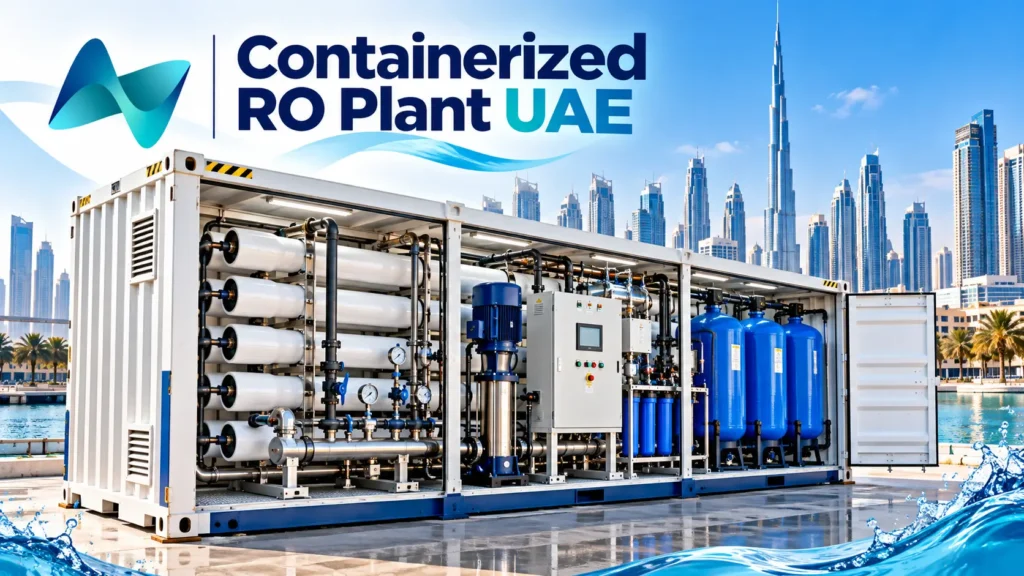
Need a containerized RO plant UAE solution for a remote facility, construction site or industrial project? A containerized reverse osmosis system combines essential water treatment equipment within a transportable enclosure, potentially reducing on-site installation work. However, selecting the right system requires more than choosing a container size. Feed-water quality, production capacity, utilities and operating conditions determine the final configuration. New Tech Water helps industrial clients evaluate water treatment requirements and discuss suitable RO solutions for their projects in the United Arab Emirates. Containerized RO Plant UAE: When Is It the Right Choice? A containerized RO plant UAE project is worth considering when a facility needs treated water without constructing a conventional water treatment building. Containerized systems can accommodate essential treatment equipment within an enclosed, transportable arrangement, making them relevant to projects with limited installation space, temporary operations or remote locations. However, the suitability of a containerized system depends on the treatment duty, available utilities and site constraints. A compact enclosure does not eliminate the need for proper engineering, safe access or reliable water supply connections. Common applications for containerized water treatment UAE projects include: Construction sites requiring treated water for temporary facilities and defined site operations. Remote industrial facilities where permanent treatment infrastructure is limited. Worker accommodation and camps with specified water consumption requirements. Temporary industrial projects that may require equipment relocation. Factories expanding water treatment capacity without enlarging an existing plant room. EPC projects requiring coordinated equipment supply and clearly defined installation responsibilities. A mobile water treatment plant UAE configuration may also be considered where the project schedule makes extensive civil construction impractical. Nevertheless, the expected installation time must account for foundations, transport, utility connections and commissioning. New Tech Water works with industrial water treatment equipment and RO technologies. Project teams can discuss whether a containerized arrangement is technically appropriate for their water source, required output and operating conditions. Need a containerized RO plant for a construction site or remote facility? Contact New Tech Water to discuss your project location, water source and required production capacity. What Is Included Inside a Containerized RO System? A containerized RO system UAE configuration generally integrates the major treatment components within a coordinated enclosure. The equipment arrangement is determined by the feed-water characteristics, required permeate quality, operating pressure and available internal space. Reverse osmosis removes dissolved salts through a membrane separation process. However, membranes cannot operate reliably without appropriate pretreatment, pumping and monitoring equipment. A properly specified containerized system must therefore be considered as a complete treatment process rather than a membrane skid alone. Typical equipment may include: Pretreatment filters selected according to turbidity, suspended solids and feed-water conditions. Cartridge filters to provide additional protection before the RO membrane stage. High-pressure pumps sized according to the required flow and membrane operating conditions. RO membrane elements and compatible pressure vessels. Chemical dosing equipment where required for scale control or other treatment objectives. Pressure, flow and conductivity instruments for operating-data monitoring. Electrical control panels, protective devices and operating alarms. Internal piping, isolation valves, drainage and maintenance access arrangements. Depending on the application, a packaged RO plant UAE design may also need external feed-water storage, treated-water tanks, additional pretreatment or separate chemical storage. These items are not automatically included in every containerized package. Buyers should review the equipment list, process flow diagram and supply exclusions before comparing proposals. This helps establish whether the quotation covers the complete operating system or only selected treatment components. Explore New Tech Water’s water treatment plant solutions for additional information about treatment technologies and plant configurations. Want to identify the equipment required inside your RO container? Share your feed-water analysis and target water quality with New Tech Water for a technical discussion. Containerized RO vs Skid-Mounted and Conventional RO Plants Choosing between a container RO plant UAE solution, a skid-mounted RO system and a conventional treatment facility requires an assessment of the complete project. Equipment capacity, transport restrictions, available space and future maintenance all influence the decision. A containerized plant places treatment equipment within an enclosed structure that can be transported to the project site. A skid-mounted RO system UAE arrangement normally consists of equipment assembled on a supporting frame and installed in a suitable plant room or designated operating area. A conventional treatment plant may use several separate equipment areas and additional civil infrastructure. The most relevant differences are: Installation space: Containerized systems offer a defined equipment footprint, while conventional installations can provide greater layout flexibility. Site preparation: A containerized plant may reduce building requirements but still needs a suitable foundation and utility connections. Equipment protection: A properly designed enclosure can provide protection from certain external environmental conditions. Maintenance access: Conventional plant rooms may offer more clearance for replacing large equipment and membrane elements. Transport: Container weight, dimensions, lifting requirements and access routes must be reviewed before delivery. Expansion: Additional treatment modules may be possible, subject to hydraulic, electrical and space limitations. For portable industrial RO UAE applications, relocation requirements deserve particular attention. A system expected to move between sites may need suitable connection points, mechanical protection and a transport plan. The lowest initial equipment cost should not determine the selection alone. Project teams should compare the complete installed scope, operating requirements and expected maintenance activities. Not sure whether a containerized or skid-mounted RO system is better for your facility? Contact New Tech Water to review your installation space, water demand and technical requirements. Mobile RO Plant UAE: Capacity, Feed-Water and Utility Requirements Mobile RO plant UAE capacity should be based on actual treated-water demand and the operating conditions under which that demand must be met. Selecting equipment solely from a nominal daily production figure can lead to an unsuitable system if feed-water salinity, operating hours or product-water requirements differ from the original assumptions. Before selecting a containerized desalination plant UAE configuration, buyers should define several essential parameters. Daily water demand: Establish average consumption, peak demand and any anticipated increase. Operating schedule: Confirm whether the plant will run continuously or during specified hours. Feed-water source: Identify whether the incoming

RO plant supplier UAE offering industrial reverse osmosis water treatment systems
نظام RO صناعي

RO Plant Supplier UAE

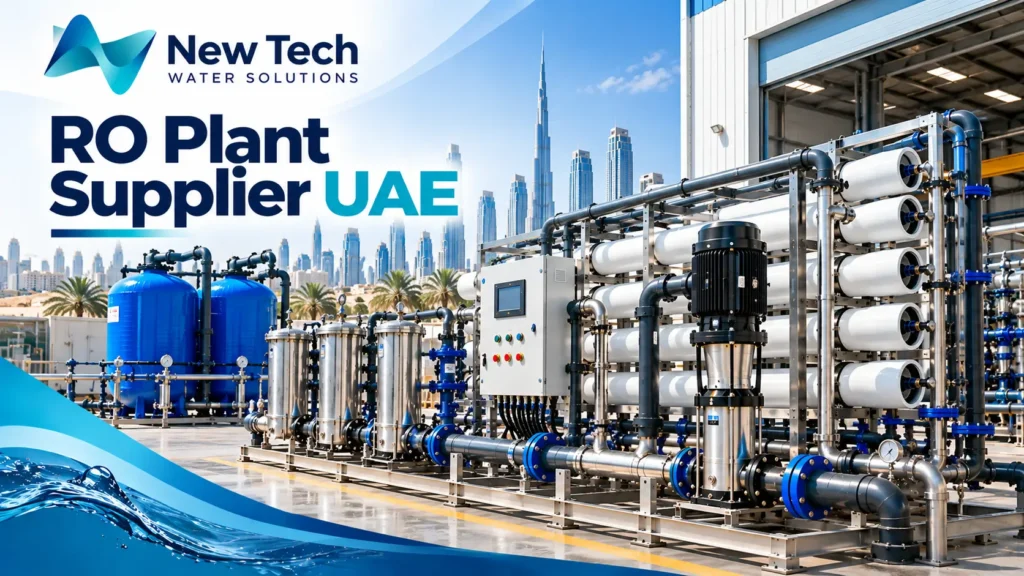
Looking for an RO plant supplier UAE project teams can rely on for industrial or commercial water treatment requirements? Selecting the right supplier involves more than comparing plant capacity and initial price. Feed-water quality, required product-water quality and equipment specifications all influence the system that fits the project. Installation scope, commissioning, spare parts and long-term operating requirements can also affect the final proposal. New Tech Water helps buyers evaluate these requirements and define an RO plant scope around the actual needs of the facility and its operating conditions. RO Plant Supplier UAE: What Should Buyers Evaluate Before Requesting a Quote? RO plant supplier UAE selection should begin with a clear understanding of the project rather than a request for a standard system based only on nominal capacity. A supplier needs sufficient technical information to evaluate the treatment requirement, equipment scope and operating conditions before preparing a meaningful proposal. Before requesting a quotation, buyers should define as much of the following information as possible: Feed-water source. Available water analysis. Required RO plant capacity. Target product-water quality. Daily water demand. Operating hours. Site conditions. Available utilities. Space or access limitations. Required automation level. Installation and commissioning requirements. Consultant or end-user specifications where applicable. The supplier should be able to review these inputs and explain how they affect the proposed system. When evaluating an RO plant supplier UAE project teams should confirm that the proposal reflects actual water conditions rather than nominal flow alone, as two projects with the same capacity can require different pretreatment, equipment or control requirements. This technical evaluation also gives procurement teams a better basis for comparing proposals. Instead of asking which supplier offers the lowest headline price, buyers can determine whether competing quotations are based on comparable requirements and scopes. Planning an RO project in the UAE? Send New Tech Water your water analysis, required capacity and target water quality to start defining the appropriate supply scope. Industrial and Commercial RO Systems for UAE Applications Industrial and commercial RO systems can serve different water-treatment requirements across factories, hotels, commercial facilities and engineering projects. However, the type of facility alone should not determine the final reverse osmosis configuration. An industrial RO supplier UAE project may need to consider: Water required for industrial processes. Utility-water applications. Factory water-treatment requirements. Hotel and hospitality applications. Commercial facility requirements. Contractor and EPC project specifications. A commercial RO system can have different operating requirements from a factory system even when the nominal capacity appears similar. The required product-water quality, operating schedule, feed-water characteristics and level of automation may change the final equipment scope. For this reason, buyers should define the application and point of use before selecting equipment. A suitable RO water plant supplier UAE proposal should connect the system specification to the actual water requirement instead of applying the same package to every project. Need an industrial or commercial RO system for a UAE project? Share the application and operating requirements with New Tech Water for project-specific evaluation. How Feed-Water Analysis Changes the RO System Specification Feed-water analysis is one of the most important inputs an RO supplier needs before finalizing a system specification. A technically focused RO plant supplier UAE buyers evaluate should use available water data to establish the conditions entering the plant and determine the appropriate basis for pretreatment and reverse osmosis requirements. Depending on the water source and project, relevant parameters can include TDS or conductivity, hardness, alkalinity, silica, iron, manganese, turbidity and pH, together with other parameters relevant to the proposed treatment process. The analysis can influence several areas of the technical proposal, including: Pretreatment requirements. RO membrane configuration. Pump operating requirements. Recovery considerations. Chemical dosing where required. Monitoring and instrumentation requirements. Operating assumptions used in the proposal. A supplier should therefore request appropriate feed-water information instead of treating every incoming water source as identical. The target product-water quality should also be defined because the design needs to consider both the incoming water and the required treatment result. For general background on the different processes used to improve water quality, buyers can review this overview of water purification. The final RO specification should still be based on the actual project data. Already have a feed-water analysis? Send it to New Tech Water with your required product-water quality and capacity for technical review. RO Equipment Supplier UAE: Membranes, Pumps, Pressure Vessels and Pretreatment An RO equipment supplier UAE proposal should identify the major equipment included in the system and show how the selected components relate to the proposed operating duty. Buyers should avoid comparing component names alone without considering specifications, materials and operating requirements. Depending on the project scope, an RO plant can include: Pretreatment equipment. Cartridge filtration. Chemical dosing equipment where required. High-pressure pumps. RO membranes. Pressure vessels. Flow and pressure instrumentation. Conductivity monitoring where specified. Piping and valves. Electrical and control panels. Component brands can be relevant during procurement, but brand name alone does not confirm that a component is suitable for the required duty. When comparing an RO plant supplier UAE buyers should review pressure rating, material, efficiency, operating point and compatibility with the complete system alongside the proposed component brands. Project teams evaluating individual components can review New Tech Water’s water treatment products while defining their equipment requirements. Have an RO equipment list or consultant specification? Send your requirements to New Tech Water to discuss the equipment scope for your project. What Should Be Included in an RO Plant Technical and Commercial Offer? A useful technical and commercial offer should make it clear what the supplier is proposing, what assumptions have been used and which responsibilities are included or excluded. This is especially important when several suppliers are quoting for the same project. Buyers should look for clear information covering: Feed-water design basis. Required plant capacity. Target product-water quality. Relevant operating assumptions. Pretreatment configuration. RO system configuration. Major equipment and components. Instrumentation and control scope. Materials where relevant. Installation responsibilities. Commissioning scope. Technical documentation. Spare parts or consumables where included. Commercial exclusions. A clear

RO plant manufacturer UAE – custom industrial reverse osmosis system
نظام RO صناعي

RO plant manufacturer UAE

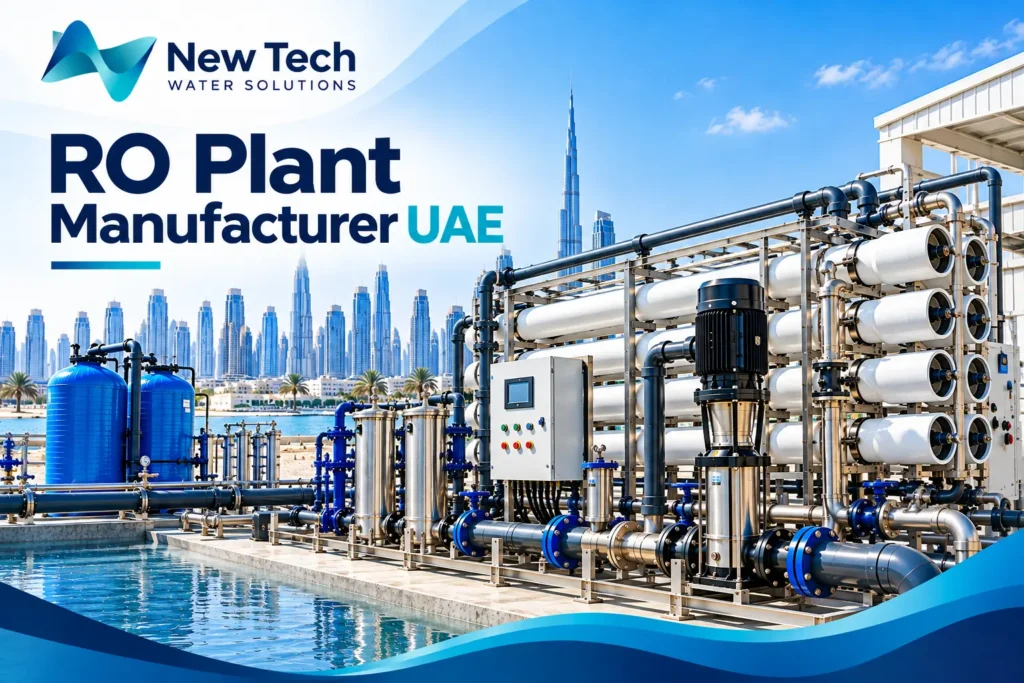
Looking for an RO plant manufacturer UAE project teams can work with to develop a custom industrial reverse osmosis system? Choosing a manufacturer is not simply about finding a standard RO package. The system needs to reflect the feed-water conditions, required production capacity, target product-water quality and operating requirements of the project. For EPC contractors, consultants and industrial buyers, the manufacturing process also involves skid configuration, materials, component selection, instrumentation, controls, testing and technical documentation. New Tech Water evaluates these project requirements to help define an RO system around the intended application rather than relying on a one-size-fits-all specification. RO Plant Manufacturer UAE: What Should Buyers Evaluate Before Choosing a Manufacturer? RO plant manufacturer UAE selection should begin with engineering capability and the manufacturer’s ability to translate project requirements into a suitable system configuration. Buyers should evaluate more than nominal flow capacity because the quality of the final RO plant depends on how the complete system is specified, assembled and prepared for operation. Important areas to evaluate include: Ability to review feed-water information. Understanding of required product-water quality. RO system design capability. Skid fabrication and assembly requirements. Materials of construction. Selection of pumps, membranes and pressure vessels. Instrumentation and control requirements. Factory inspection and testing scope. Technical documentation. Installation and commissioning responsibilities. Spare-parts and after-handover requirements. A strong technical comparison should establish whether the proposed system is built around the project conditions rather than simply matching a requested capacity. This is especially important for industrial applications where feed-water characteristics, operating hours, site limitations and downstream water requirements can affect the final configuration. Planning a custom RO project in the UAE? Send New Tech Water your water analysis, required capacity and project specification to start defining the system requirements. Custom RO System UAE Design Based on Feed Water and Product-Water Targets A custom RO system UAE project should begin with the relationship between incoming water quality and the water quality required after treatment. Capacity alone does not provide enough information to define the complete plant. The manufacturer needs to understand what enters the system, what the process needs to achieve and how the plant is expected to operate. Key design inputs can include: Feed-water source and available analysis. Required production capacity. Target product-water quality. Daily operating hours. Available utilities. Space and access conditions. Required level of automation. Materials specified by the project. Consultant or end-user requirements. These inputs help establish the basis for pretreatment, RO configuration, pumps, membranes, instrumentation and controls. They can also identify project constraints that should be addressed before fabrication begins. For buyers searching for an RO plant manufacturer UAE, customization should have a clear technical purpose. The objective is not to add unnecessary complexity, but to align the system with the actual feed-water conditions, treatment duty and operating requirements. Need a custom RO system for a specific industrial application? Share your feed-water data and product-water targets with New Tech Water for project-specific evaluation. RO Plant Design UAE: From Water Analysis to the Final System Configuration RO plant design UAE requirements should be developed from a defined treatment basis. Feed-water analysis provides important information for evaluating the conditions the system will need to handle, while the target product-water specification helps establish the required treatment result. Depending on the project, the design process can consider parameters such as TDS or conductivity, hardness, alkalinity, silica, iron, manganese, turbidity and pH, together with other relevant water-quality data available for the application. The resulting system configuration can then address: Pretreatment requirements. Cartridge filtration where required. Chemical dosing requirements where applicable. High-pressure pumping. RO membrane configuration. Pressure-vessel arrangement. Instrumentation and monitoring. Control requirements. Product-water and concentrate arrangements. When evaluating an RO plant manufacturer UAE, buyers should confirm that the proposed configuration is based on the available water analysis and target product-water quality. Two systems with the same nominal capacity can require different treatment arrangements when their feed-water conditions or operating requirements differ. Project teams can also review New Tech Water’s water treatment plants while defining the broader treatment requirements of a project. Have a water analysis and design specification ready? Send the available project data to New Tech Water to discuss the required RO configuration. RO Skid Manufacturing: Fabrication, Materials and Component Selection RO skid manufacturing brings the individual treatment components together into a coordinated system. When comparing an RO plant manufacturer UAE, project teams should review both the individual components and the way they are integrated into the complete skid. Pumps, membranes, instruments and pressure vessels should be evaluated against the duty they are expected to perform. Depending on the agreed design, buyers may need to review: Skid and structural requirements. Piping materials. Valve specifications. High-pressure pump requirements. RO membrane selection. Pressure-vessel specifications. Flow and pressure instrumentation. Conductivity monitoring where specified. Chemical dosing equipment where required. Electrical and control-panel requirements. Materials of construction should be considered against the operating conditions and project specification. Component selection should likewise consider duty suitability, pressure requirements, compatibility, efficiency and service considerations rather than relying only on a familiar brand name. A clear bill of materials can help project teams understand what is included in the manufactured system and compare alternative proposals on a more consistent basis. Have a component schedule or consultant specification? Send it to New Tech Water to discuss the required RO skid and equipment scope. Instrumentation, PLC Controls and Automation for Industrial RO Systems Instrumentation and automation help operators understand system conditions and control the RO process according to the requirements of the project. The appropriate level of control can vary between applications, so automation should be specified around operational needs rather than added without a defined purpose. Depending on the agreed system scope, instrumentation and controls can address: Pressure monitoring. Flow monitoring. Conductivity monitoring where required. Tank or level signals where applicable. Pump control. Dosing-system control where included. Operating alarms. Interlocks and protection logic. Automatic operating sequences where specified. The control philosophy should be understood before manufacturing is completed. Consultants and project owners may have specific requirements for the PLC, control

en_USEnglish
Scroll to Top